Cooking Classes

Showing posts with label pork. Show all posts

11.4.17

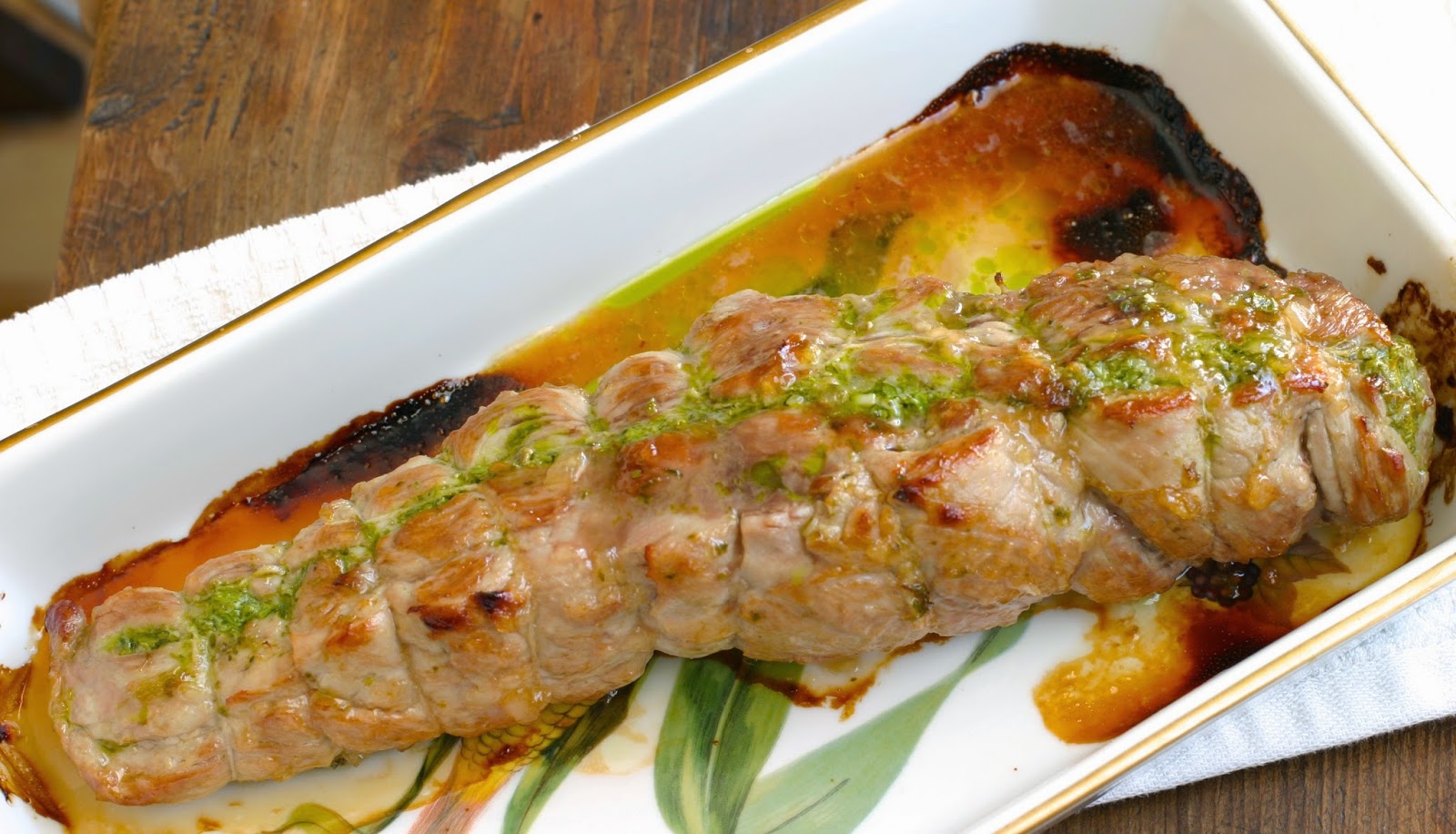
Mushroom and Sausage Stuffed Pork Tenderloin


Pork tenderloin is not only an economical meal but easy to prepare for a large group. Each tenderloin is browned in a pan then finished in the oven. Can you see where this is going?  Yes, prep all the stuffed tenderloins first. Then heat a large pan or a couple of smaller pans over medium high heat. Add cooking oil to the pans. Heat until almost smoking. Add the tenderloins and turn until all sides are browned. Remember to let the pan release the meat. Otherwise the tenderloin will stick to the pan.

Mushroom and Sausage Stuffed Pork Tenderloin

1 c. chopped mixed wild and cremini mushrooms
1/2 lb. pork sausage meat
1/2 tsp. thyme
1 tsp. salt
1/2 tsp. pepper
cooking oil
2 pork tenderloins

Saute the mushrooms in enough cooking oil to cover the bottom of the pan. When the mushrooms are soft add the sausage meat and seasonings. Saute until fully cooked. Remove from heat and cool to room temperature.

Meanwhile, butterfly both tenderloins. Cut down the centre but through so they lie flat. When the mushroom sausage filling has cooled spread it over the flattened tenderloins. Close the tenderloins and tie with cooking string.

Sear on all sides in a hot pan with cooking oil. Remove to a 375 F oven to finish cooking until the meat reaches an internal temperature of 140 F, about 10 - 12 minutes. Place tenderloins on a cutting board and cover with kitchen foil. Let rest for 10 minutes until slicing. Slice into medallions about 1-inch thick. Set on serving platter or individual plates. Spoon pan sauce around and serve immediately.

Pan Sauce: Make the pan sauce by deglazing the cooking pan with 1 cup of chicken stock. Bring to a boil. Add 2 -3 tablespoons of Lowbush Cranberry Mustard. When it is all blended and bubbling add 2 tablespoons of butter. Stir until emulsified.


Lowbush Cranberry Mustard
3/4 c. lowbush cranberries
2 tbsp. sugar
1/4 c. red wine
1/4 c. red wine vinegar
1/2 tbsp. Dijon mustard
1/2 tsp. sea salt
1/4 tsp. black pepper

Combine all ingredients in a saucepan and boil until tender. Remove from heat. Serve chilled or at room temperature.

29.12.15

Pasta alla Norcina


It isn't often that I find a recipe using only ground pork. Usually it is mixed with beef and/or veal. Perhaps that and the simplicity of this recipe attracted me. Orchiette, fondly called little ears, pasta is suggested but I had none. Penne worked fine.

Rather than transcribe the recipe, just go to the source. Click here and you can find it on Cooks Illustrated in resplendent detail.

23.5.15

A Recipe from Jennifer McLagan's new cookbook Bitter

After three immensely interesting and popular single subject cookbooks Bones: Recipe, History and Lore,  Fat: An Appreciation of a Misunderstood Ingredient and Odd Bits: How to Cook the Rest of the Animal, Jennifer McLagan admits this fourth book is it for awhile. Unless it is a really good idea she is not interested and at the moment she doesn't have that flash of genius.

Genius is seen in her latest book Bitter: A Taste of the World's Most Dangerous Flavor, with Recipes. In an informed style she explores the nuances of bitter. "When was the last time you had a broiled half grapefruit in a restaurant?" She is correct in saying that the previously ubiquitous white grapefruit has all but disappeared from the North American palate. Sweetness is being bred into our fruits and vegetables resulting in less complexity in our dining flavours.

Bitterness is added with chocolate, coffee and a variety of fruits and vegetables such as turnip, chokecherry and radicchio. Many of us have recipes in our box with bitter flavours without understanding why we love them so.

This recipe for pork chops is perfect. There is somewhat of a smokiness in the flavour profile, some acidity and a hint of sweetness that compliments the fatty character of pork.

Thanks to my almost-twin cousin residing in New Zealand for the heads up on this delightful dish. He sent it to both myself and his daughter, Sarah, presumably named after moi. There you go. Three peas in a pod.

Speaking of pods, click here to find the podcast of an interview with the author. It is an enlightening glimpse into the world of bitter. You must listen.


  • 4 rib pork chops, about 1 1/2 inches
  • Sea salt and freshly ground black pepper
  • 2 tablespoons lard
  • 1 shallot, finely chopped
  • 1 large branch fresh thyme
  • 1 cup brewed coffee
  • 1 cup chicken stock, preferably homemade
  • 1 heaping tablespoon black currant preserves
Twenty minutes before cooking, remove the pork chops from the refrigerator. Pat dry and season with salt and pepper. In a frying pan large enough to hold the chops, heat the lard over medium-high heat. When the fat is hot, add the chops and brown for 2 minutes on each side.
Transfer the chops to a plate, lower the heat, and add the shallot and thyme to the pan. Stir, and cook until the shallot begins to color. Pour in the coffee and chicken stock and bring to a boil, deglazing the pan by scraping up the browned bits from the bottom. Boil to reduce the sauce by about half.
Return the chops to the pan and lower the heat so the liquid is simmering. Cook the chops for 5 minutes, basting with the sauce from time to time. Turn the chops and cook for another 5 minutes, or until cooked.
Place the chops on a platter and keep warm loosely covered with aluminum foil. Remove the thyme from the pan and add the black currant preserves. Stir and cook the sauce until syrupy and reduced to about 1/3 cup / 75 ml. Return the chops to the pan with any juices, and turn to coat with the sauce. Check the seasoning of the sauce—remember it should be pleasantly bitter—and serve the chops, spooning over the sauce.


10.4.15

Pork Tenderloin Stuffed with Fiddlehead Pesto


I am still finding fiddleheads in the nooks and crannies of my freezer. Last spring I put together a bulk order from my little town and brought in 25 pounds of these delicate fern tips from the boreal forests of Northern Saskatchewan. I pickled a few to sell at the market. They were a curiosity and sold well. I find that a few pickled fiddleheads add an artistic touch to a charcuterie platter.

In addition to buying more than I really needed for myself there were a couple of no-shows on pick up orders. Hence, the freezer stash.

For no particular reason I have always thought these to be uniquely Canadian or at least North American. My Canadian born cousin living in New Zealand was baffled by fiddleheads until I gave a description. I have since been introduced to pikopiko ferns, as the Maori call them. This pesto is inspired by a Maori recipe.

The tenderloin would benefit from a generous crust of sea salt and coarse black pepper. I failed to think of this until it was on my fork. The pesto is not salted, other than the Parmesan cheese.

Removing the silver skin from the tenderloin takes this dish from the ordinary to the gourmet. Silver skin does not tenderize with cooking.

I was delighted to find that the unique flavour of the fiddleheads does shine through. It isn't simply a flavourful stuffing but also a delightful way to serve a vegetable.

The pesto recipe can fill three tenderloins. If you are only cooking one save the remainder to use on flatbreads and crostini just as a basil pesto might.


Pork Tenderloin Stuffed with Fiddlehead Pesto

1 pork tenderloin
1 recipe Fiddlehead Pesto


 Remove silver skin. It will not tenderize with cooking. Slit the tenderloin open.


Fill with pesto and tie shut. Season generously with salt and cracked pepper.


Heat canola oil in a large heavy bottomed pan. Brown the tenderloin on all sides. Then place in a 350F oven until it reaches an internal temperature of 160F. Remove from oven and tent with foil to rest for 10 minutes. Slice and serve with any juices that collected on the bottom of the dish.


 Fiddlehead Pesto


3 cups of boiling water with a pinch of salt
250g frozen or fresh fiddlehead greens, approx. 2 cups
1/3 cup olive oil, add more if needed
3 tablespoons crushed pine nuts or walnuts
3 garlic cloves, finely minced
1/4 cup grated parmesan cheese

Cook fiddleheads in boiling water with salt 8 minutes, drain very well. Set aside.


Crush nuts and garlic in a mortar and pestle. Add to a food processor. Add fiddleheads, olive oil and parmesan cheese. Process until smooth. Presto. You are done. Use as desired.

2.4.15

Crown Roast of Pork


A crown roast of pork is a regular bone-in pork loin. Order your roast in advance from your butcher shop. Be sure to ask it to be frenched and tied. Frenched means that the bone tips are cleaned of all meat and fat. Roasts of less than 12 ribs are difficult to form into a crown so this is usually a meal for at least eight to 10 people. Allow one and a half ribs per person or more if you want leftovers.

Crown Roast of Pork


Preheat oven to 325 F (160 C).

Prepare the roast by patting dry and generously seasoning with coarse salt and freshly ground black pepper. Wrap each bone tip with kitchen foil to prevent burning. Place a ball of foil in the centre.


Roast for 1/2 – 1 hour for a small roast and up to 2 hours for a roast over 10 pounds (4.5 kg). Then remove from oven, remove ball of foil and fill cavity with stuffing. Cover stuffing loosely with kitchen foil. Return to oven and roast until an internal temperature of 155 F (68 C) is reached. Measure the temperature by inserting a meat thermometer into a thick portion of the meat without touching a bone. 

Remove foil from bone tips and stuffing about 30 minutes before roast is fully cooked. At this time if you find that the roast is not browning as much as you like, brush it with the caramelized juices from the bottom of the roasting pan and increase oven temperature to 475 F (245 C). 

When internal temperature is reached, remove from oven and tent with kitchen foil. Rest for 10 minutes. The temperature will continue to rise a few degrees while it is resting. Pork is fully cooked at 160 F (71 C). Rule of thumb for total roasting time is 10-15 minutes per pound. 

Slice between each bone to serve. (Adapted from Put Pork on Your Fork)

Wild Rice and Bread Stuffing

1/4 c. celery, finely diced 60 mL
1/4 c. onion, finely diced 60 mL
3 tbsp. butter 45 mL
salt and pepper, to taste
1/2 tsp. dried sage 2 mL
1/2 tsp. dried thyme 2 mL
1 c. day old bread cubes 250 mL
1/2 c. dried cranberries 125 mL
1/4 c. chicken or mushroom stock 60 mL
1 c. cooked wild rice 250 mL

Plump dried cranberries in 1/2 cup (125 mL) of very hot water for 15 minutes. Drain and set aside.

Saute celery and onion in butter until translucent. Add seasonings, dried cranberries, wild rice and bread. Remove from heat. Stir to mix and add stock. 

Oven Roasted Vegetables


carrots
baby potatoes
butternut squash
cooking oil
coarse salt and freshly ground black pepper

Preheat oven to 325 F (160 C). 

Wash baby potatoes and slice larger ones in half. All pieces should be about the same size. 

Peel and cut carrots into same size pieces as potatoes. Slice squash into rings and scoop out the seeds. Do not peel squash. It will hold its shape better if left unpeeled.

Pat dry and toss all vegetables in enough cooking oil to lightly coat and arrange on an ungreased baking sheet. Generously season with coarse salt and freshly ground black pepper. 

Roast in preheated oven until tender, about 20 minutes. Stir occasionally, if necessary, but it is ideal to have some browning.


20.2.15

Chinese Hot and Sour Soup


This is one of my favourite authentic Chinese recipes. This is so easy to make. The surprise to me in this recipe is that the spiciness or heat comes from the white pepper that is added. I have always thought there was a sriachi or hot sauce. Nope, simply white pepper.

This recipe will come together much more smoothly if all the ingredients are chopped, measured and ready to add before beginning to cook. In French this is called mise en place, everything in its place. Chop, measure and line up the ingredients so you can focus on combining them in creating pure alchemy with this recipe for Hot and Sour Soup.

Many of the same ingredients are used over and over again in this cuisine. If you are a fan then it is worth building a pantry.


 Chinese Hot and Sour Soup

2/3 c. boneless pork loin, cut into 1/4 inch strips 
2 tsp. dark soy sauce
4 small Chinese dried shitake mushrooms
3/4 c. dried black fungus
1 1/2 tbsp. cornstarch
1/2 c. canned sliced bamboo shoots, cut lengthwise into 1/8 inch wide strips
2 tbsp. red wine vinegar
2 tbsp. rice vinegar, unseasoned
1 tbsp. light soy sauce
1 1/2 tsp. sugar
2 tbsp. vegetable oil for frying
4 c. using mushroom soaking liquid and sodium reduced chicken stock
3 to 4 oz. firm tofu, rinsed and drained, cut into 1/2 inch cubes
1 large egg
1 tsp. sesame oil
1 1/2 tsp. ground white pepper
2 tbsp. thinly sliced green onions
2 tbsp. fresh whole cilantro leaves
Toss pork with dark soy sauce until well coated. 

Soak shitake and black fungus in boiling hot water to cover, about 30 minutes.  Cut out and discard stems from shitakes, then squeeze excess liquid from caps and thinly slice. Squeeze liquid from black fungus. Trim any hard nubs. In another bowl, stir together 1/4 cup (60 mL) cooled mushroom soaking liquid with cornstarch and set aside.

Stir together vinegars, light soy sauce, sugar and salt. 

Heat a wok or heavy pan over high heat. Add vegetable oil and stir fry pork until it just changes colour, about one minute. Add shitake mushrooms, black fungus and bamboo shoots and stir fry one minute. 

Add stock and bring to a boil, then add tofu. Return to a boil and add vinegar mixture. Stir in cornstarch mixture and return to a boil. Liquid will thicken. Reduce heat to moderate and simmer one minute. 

Beat egg with a fork and add sesame oil. Add egg to soup in a thin stream, stirring slowly in one direction with a spoon. Stir in white pepper. Sprinkle with green onions and cilantro before serving.  Makes 6-8 first courses. (Adapted from Bruce Cost)

19.2.15

Chinese Pork and Chive Dumplings


In 2015 the lunar new year, Chinese New Year or Tet begins on February 15 and lasts for 15 days. The holiday is celebrated with the entire family enjoying restaurant and home feasts. 

Who doesn't love potstickers? These are one of the most popular appetizers in Chinatown. Now is the time to face the fear and make them at home. There are no ingredients that cannot be found in a modern day grocery store. Make it a party and get friends together to make a big batch. Freeze them and they are ready for an easy tapa or meal.

Pork and Chive Dumplings

The sauce
1/2 c. soy sauce 125 mL
1/2 c. black vinegar, also called sugarcane juice vinegar 125 mL
1 tbsp. sesame oil 15 mL
2 tsp. toasted white sesame seeds 10 mL

The filling
1 lb. ground pork
1 c. finely chopped garlic chives
2 tsp. minced garlic
1 tsp. salt
1 tsp. cornstarch
1 tsp. grated fresh ginger
1 tsp. freshly ground black pepper
one package 3 1/2-inch round dumpling wrappers
vegetable oil, for frying

Make the sauce by combining all ingredients and set aside until ready to serve. Makes about one cup.

Make the pork filling by combining all ingredients except for dumpling wrappers and vegetable oil.

Working with one dumpling wrapper at a time, place a tablespoon of pork filling in the center of the wrapper, moisten the edge of the wrapper and fold in half. Pinch the dumpling at one end and pinch as you go until you have a total of 6 pleats and the dumpling is closed. Place dumpling on a parchment lined baking sheet. Repeat with remaining dumpling wrappers until all filling has been used. Cover dumplings with a damp paper towel until ready to cook or at this point they can be frozen and cooked later.

In a large non-stick skillet, heat two tablespoons of oil over medium-high heat. Working in batches, arrange the dumplings in a single layer and cook, until the bottoms begin to brown, about one minute. Pour half cup water into the pan, cover with a lid and steam until the filling is almost cooked through, about 2 minutes. Uncover and cook, until the all the water has evaporated and the bottoms have become golden brown and crisp, about 2 minutes. Serve warm. 

3.11.14

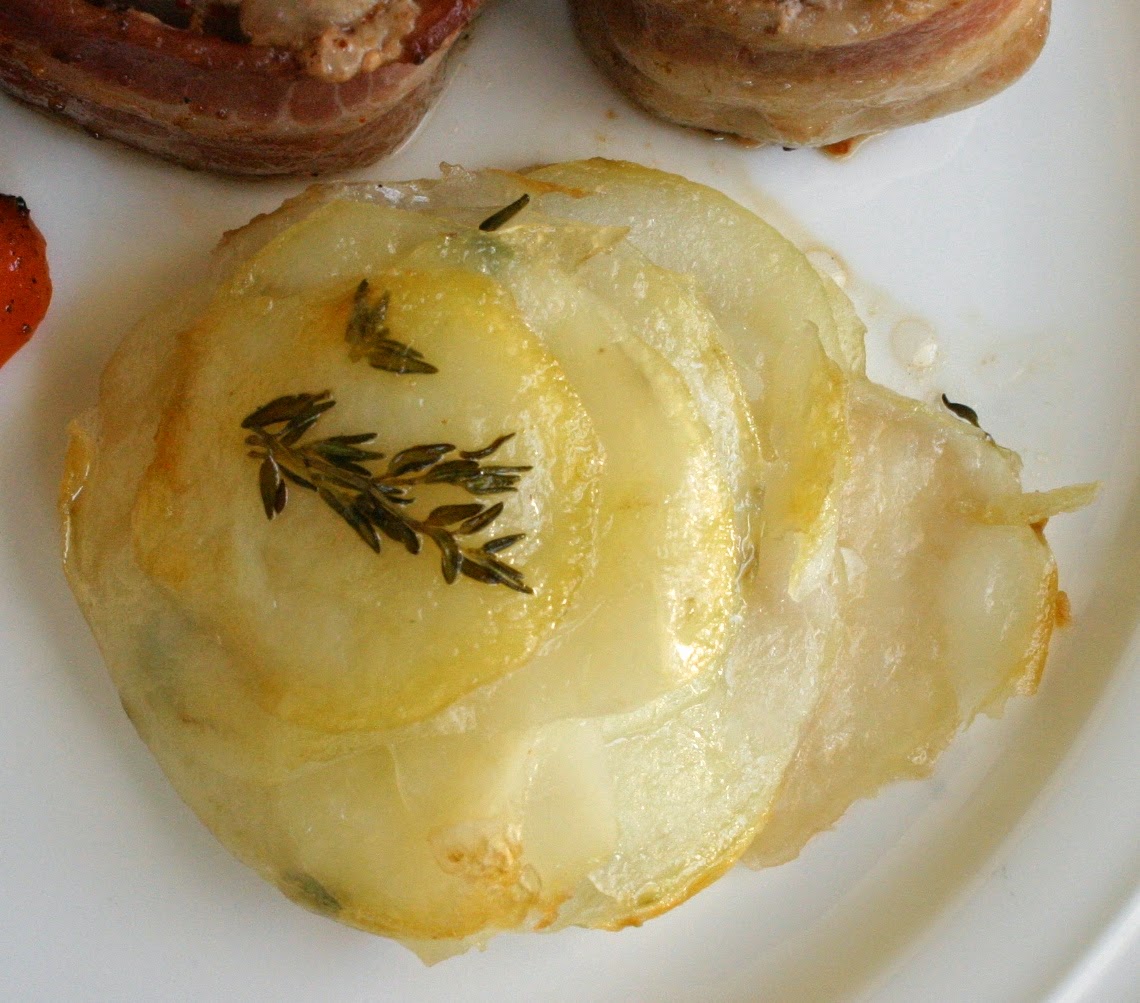
Bacon Wrapped Pork Medallions with Individual Pommes Anna


As I organize and make list after list for my upcoming drive to Victoria, BC (read 'seafood') I am still reminded by tummy growls that I must make food. I am a recovered hoarder and now check my freezer first before planning meals. I have a beautiful naturally raised pork tenderloin from Carmen Corner Meats in Waldheim, SK. And I still have market potatoes and carrots.

Rather than grill up the entire tenderloin as I usually do I decided to cut it into medallions and then pan grill. After making this recipe I have decided that it is a good one to make for a crowd. It is relatively inexpensive yet looks elegant. It can be prepped in advance and cooked all at once in a large pan. If I was catering this would be on my menu for sure.

Pommes Anna, obviously a French version of a potato dish, has been cropping up a lot lately. Ditto this for a crowd. I made mine in a muffin tin for an individual size serving but it could also be made in a pan and cut into squares for serving.

I like easy peasey recipes and have also been wanting to play with my piment d'esplette that I purchased back in the spring. Time flies, doesn't it. I have already kept it long enough. Ground spices and herbs have a shelf life of up to 2 years. Some say 12 months.

Piment d'esplette is the champagne of hot chiles in more way than one. It is a chili pepper that is cultivated in the Basque region of France in the Atlantic Pyrenees. These peppers were introduced from Mexico in the 16th century. Initially they were used medicinally but later became a staple in flavouring their food. Now it has AOC status. This is appellation d'origine de contrȏlée which translates to 'controlled designation of origin'. So you see, it is like champagne. Unless it comes from the Esplette region it cannot have this name.

What is so special about this chile, you say? It is only 4000 on the Scoville scale of heat so it isn't that hot but it is packed with flavour. It has a slightly smokey flavour. It has replaced black pepper in many Basque recipes.


Bacon Wrapped Pork Medallions

1 small pork tenderloin
8 - 10 slices bacon
sea salt
piment d'esplette

Remove tenderloin from the refrigerator about 30 minutes before you will be cooking. Season generously with piment d'esplette and sea salt. Cut into medallions the thickness of the bacon slice.

Preheat your oven to 350 F.

Slowly sauté slices of bacon in a heavy grill pan or cast iron pan until browned but not crispy. If they are too crispy they won't wrap around the medallions. Wrap medallions with the bacon pieces and secure with a toothpick. Season both top and bottom of the medallion with more piment d'esplette and sea salt. It is a thick piece of meat and the seasoning has to compensate for that so be liberal.

Over medium heat in the same pan used for the bacon place the medallions flat side down and sauté until bottom is golden, about 3 or 4 minutes. Turn over and brown the other side. Place the pan in the oven and continue to cook until the meat is no longer pink in the centre. An internal temperature of 145 F is ideal. Remove from the oven and tent with foil until ready to serve.

Mini Pommes Anna

small potatoes
butter
garlic
fresh thyme
sea salt

Peel potatoes and slice with a mandoline so they are almost transparent thin. I don't have a mandolin so I used my box grater. You know, that side you never use? It worked perfectly to make very thin slices.

Melt butter and brush each muffin tin with the butter. Place a round piece of parchment paper on the bottom of each muffin. Place a small sprig of thyme and then drizzle about half a teaspoon of butter in each cup.

Add minced garlic and more chopped thyme to the butter. 

If you are not immediately using the sliced potatoes put them in a bowl of cold water. If left in the air they may discolour. Before using, drain the water and dry the potatoes in a clean tea towel. Place in a bowl and drizzle with the seasoned butter and mix well.

Arrange the potato sliced in each muffin cup. Press down and fill as high as possible. It will wilt down during cooking. Cover tightly with tin foil and bake in 350 F oven for about 15 minutes. Remove the foil and bake for another 15 minutes or until tender and nicely browned on the edges.


5.8.14

Backyard Barbecue Ribs

Honey apricot jam is delicious with ribs.

We are enjoying the summer and sunshine with a backyard barbecue with the Cooking Club this month. It has been screaming hot and turning on the oven is not an option today. Ribs are a favourite barbecue meat yet something I rarely make. As is my habit, I have tweeked the Cooking Light recipe. I have converted it to a dry rub rather than a paste. I have eliminated the slow cooking in the oven by keeping the ribs on the barbecue.

Barbecue is nicer when using charcoal but if you have a gas grill, soak purchased barbecue woodchips. Place them in a foil pan with holes poked in it and cover with kitchen foil. The smokey flavour is so tasty. You won't want to do this any other way. 


Ribs are to be tender but not with the meat falling off the bone. Low and slow heat is key. Brown over the coals and then move them to a spot on the grill that is cooler. Keep the lid on the barbecue and cook the ribs for up to 2 hours on the cool side of the grill.

Here is the rest of the menu


Backyard Barbecue Ribs

Rib Rub
2 tsp. ground ancho chiles
2 tsp. ground morasch chiles
1 tsp. ground cumin
1 tsp. Spanish smoked paprika
2 tbsp. brown sugar
2 tsp. sea salt
1 tsp. freshly ground black pepper
1/4 tsp. cayenne
3 lb. rack pork loin back ribs, trimmed

Soak wood chips in water for an hour, if using. Drain well. Place them in a disposable foil pan with holes poked in it. Set aside. Preheat grill to medium high heat using only the burner on one side of the barbecue.

Combine all ingredients, except ribs, in a bowl. 

Prepare the ribs by removing the silverskin on the back side of the rack. This will never tenderize with cooking and is best to be removed. Slip a sharp knive under if to loosen then take a towel in your hand to grab the skin. It will pull off quite easily. Discard.

Rub both sides of the ribs with the seasoning mixture. Let sit at room temperature for an hour before grilling.

Place foil container of wood chips on the cool side of the grill. Grill ribs on both sides on the hot side of the grill. As they are finished move off the direct heat. Reduce heat a little and let ribs slowly cook for about 2 hours. Keep the lid on.

When tender, remove from grill and serve.


19.4.14

Stir Fry Peppers and Asian Pork Tenderloin


This is a simple and healthy meal that can be made in less than 30 minutes. I have chosen brown basmati rice, a healthier choice than white rice. My way of cooking rice yields a light and fluffy grain. Boil in plenty of salted water until al dente. Strain through a calendar or sieve and lay a clean tea towel over the rice. Let it steam until the rest of the meal is ready. I use this method for all types of rice.

Asian Pork Tenderloin
1 large tenderloin about 1 1/2 pounds.
1/3 cup soy sauce
1/4 cup rice vinegar
3 tbsp. light brown sugar
2 medium cloves garlic, minced
1 1/2 tbsp. peeled and minced fresh ginger
1 tbsp. Asian chile sauce

Trim the pork of any silver skin. Cut on the diagonal into 1/2 inch thick medallions.
In a small bowl whisk together the soy sauce, 2 tablespoons of the vinegar, 2 tablespoons. of the brown sugar, the garlic, ginger, 1/2 tablespoons. sesame oil, and 2 tsp chile sauce.  Toss 1/2 cup of this mixture with the pork medallions in a large bowl; reserve the remaining mixture to use as a sauce.  Let the pork sit at room temperature for 15 minutes or refrigerate for up to 2 hours.

Heat 2 tablespoons canola oil in a heavy 12 inch skillet over medium high heat until shimmering hot.  Remove the pork from the marinade, shaking off the excess, and transfer the pork to a clean plate.  Discard the marinade.  Add half of the pork medallions to the skillet, spacing them evenly.  Cook them without touching until well browned, about 2 minutes.  Flip and cook until the pork is just cooked through, about 2 more minutes. 


 Stir Fry Peppers and Onions 

1 large onion
1 clove garlic
1 teaspoon minced fresh ginger
 2 large red or green peppers
2 teaspoons soy sauce
2 teaspoons rice vinegar
Freshly ground black pepper to taste
Slice onion thin; put garlic through press and mince ginger; stir fry in hot oil in large skillet for one minute.
Cut peppers in strips; add to skillet and stir fry about 5 minutes, until crisp-tender.
Add soy sauce, vinegar and pepper and cook another minute. Serves 3.


25.3.14

Oven Back Ribs with Baked Beans


Real ribs are made in a smoker cooking low and slow. It is winter and I don't feel like lighting up the barbecue. These ribs made in the oven are pretty darned good, too.

Baked beans are an excellent side dish. I made them in a slow cooker.  Rather than soaking the beans overnight and slow cooking them all day I did the opposite. It was mid-day before I thought to make them. I put them to soak and before I went to bed I assembled all the ingredients in the slow cooker and let them cook all night. The only drawback is that around 2am I was awakened by the wonderful aroma. If they had been ready I would have eaten a meal then and there. Glad they weren't done!


Oven Pork Baby Back Ribs

Rub
1/2 tbsp. smoked paprika
1/2 tbsp. ground coriander
1/2 tbsp. ground cumin
1/2 tbsp. kosher salt
1/2 tbsp. black pepper
1/2 tbsp. ground ancho chiles
1/2 tbsp. dry mustard
1/2 tbsp. dried oregano
1/4 c. canola oil

Mix all spices together in a small bowl. This makes enough for 2 racks of ribs.

Prepare the ribs by removing the shiny thin skin on the back called the silver skin. Trim off  2 or 3 ribs from the small end and 1 rib from the large end to make a more even rack. It will cook more evenly. The cut pieces can be cooked along with the racks.

Brush ribs with oil and rub with spice mixture. Place in a plastic bag for at least 2 hours or up to overnight.

When ready to cook, preheat oven to 300F. Place ribs on a baking sheet and bake in oven. After the first hour, baste with the 'mop'. Baste again after an hour. After 3 - 4 hours baking they should be ready to serve.

Mop
This is a basting liquid to keep the ribs moist while they slowly cook. It is traditionally applied with a brush called a mop.

1/2 c. barbecue sauce
1/4 c. apple cider vinegar
1 tbsp. light brown sugar
2 tbsp. apricot jam
1/4 c. apple or apricot juice or water

Bring to a boil over medium heat to melt all ingredients and cool to room temperature.


Baked Beans
Panela is a Mexican unrefined natural sugar. It has a molasses flavour. Substitute with 1/4 cup brown sugar and 1 tablespoon molasses.
3 c. dried navy beans
1/4 c. panela brown sugar
1 c. low sodium tomato juice
1/2 lb. pork belly or thick cut bacon, chopped
2 c. chopped yellow onion
2 tbsp. Worcestershire sauce
1/2 tsp. dry mustard
1 dried chipotle pepper
2 tsp. salt
Pepper, to taste
Water

Soak the beans overnight in enough water to cover by 3 inches. Drain.

Add tomato juice, panela, salt, pepper, Worcestershire sauce, dried pepper and dry mustard in slow cooker set on high with the lid on until the sugar is dissolved.

Layer the soaked beans with the bacon and onion. I make about 3 layers. Add enough water to cover the beans. Cook on low for 6 - 7 hours or until tender.

5.3.14

Parmesan and Sage Crusted Pork Chops


Although I have never visited Italy in March I think it would be much greener than March in Saskatchewan. Italy at any time of the year is a nice place to be. Menus vary from region to region and I am excited to see what my dinner partners are presenting.

If you are new to my blog, we have a virtual supper each month using recipes from Cooking Light. Yes, that's right, a lovely guilt-free meal every month. Can't beat that.

These pork chops were love at first bite. They are so easy to make, tasty and a healthy choice. I will be using this breading recipe again. Perhaps I'll try it with meatballs or chicken paillards. These bone-in pork chops are very flavourful and juicy with just a little bit of fat.

In Italian pork translates as carne di maiale. Usually pork is cured in Italy. It becomes prosciutto, pancetta, cappacolla, guancialle or lardo. But you can also find pork that is served without curing in most parts of the country.

Now go and check out these recipes honouring Italy:


Jerry's recipe from A Life Lived is Melon Prosciutto Salad with Parmigiano Reggiano.

Sandi at the Whistlestop Cafe is presenting Tuscan White Bean Soup with Proscuitto

Val from More Than Burnt Toast is making Gnocchi with Browned Butter. This is one of my favourites.

Susan's dessert Warm Caramelized Pears with Clove Zabaglione. Oh yum. This is when I wish this was a real dinner party.

This gives us all great motivation to get into the kitchen and make a lovely meal. And bonus, it is not packed with calories and fat.

These pork chops are outstanding. It is super easy to use quick fry chops. Bread them in this herbed mixture and you have a main course to build a meal around.

 Parmesan and Sage Crusted Pork Chops

    1 (1 1/4-ounce) slice white bread, torn into pieces
    1/4 cup (1 ounce) grated Parmigiano-Reggiano cheese
    1 tablespoon chopped fresh sage
    1/4 teaspoon salt
    1/4 teaspoon freshly ground black pepper
    1/4 cup all-purpose flour
    1 tablespoon prepared mustard
    2 large egg whites
    4 (4-ounce) boneless thin-cut pork loin chops, trimmed
    1 1/2 tablespoons canola oil

    1. Place bread in a food processor and pulse 10 times or until coarse crumbs measure about 1 cup. Combine breadcrumbs, cheese, sage, salt, and pepper in a shallow dish. Place flour in another shallow dish. Combine mustard and egg whites in another shallow dish, stirring with a whisk.
    2. Working with one pork chop at a time, dredge pork in flour, shaking off excess. Dip pork into egg white mixture, allowing excess to drip off. Coat pork completely with breadcrumb mixture. Set aside. Repeat procedure with remaining pork, flour, egg white mixture, and breadcrumb mixture.


 3. Heat a large nonstick skillet over medium heat. Add oil to pan, swirling to coat. Add pork; cook 3 minutes on each side or until browned and done.

Lorrie Hulston Corvin, Cooking Light
DECEMBER 2008

Nutritional Information per serving

    Calories: 272
    Calories from fat: 45%
    Fat: 13.6g
    Saturated fat: 3.7g
    Monounsaturated fat: 6.6g
    Polyunsaturated fat: 2.2g
    Protein: 28.8g
    Carbohydrate: 7g
    Fiber: 0.4g
    Cholesterol: 69mg
    Iron: 1.3mg
    Sodium: 409mg
    Calcium: 102mg

1.3.14

Pork and Squash Chili

This is meal #3 from my pork butt roast. My second meal was a pureed roasted vegetable soup with thinly sliced pork on a bun with barbecue sauce.

Pork and squash are a good match. It has a TexMex feel about it with chilis and pepitas. The family will never think this is leftovers.

Guajillo and pasilla peppers are not hot. They are considered medium on the Scoville scale. Add a hot chili pepper such as a serrano, aleppo or habenero if you like spicy food.

Pork and Squash Chili

2 dried quajillo chilis
1 dried pastilla chili
1/4 c. pepitas (pumpkin seeds)
2 c. cubed cooked pork butt roast
1/2 butternut squash, peeled and sliced
2 tbsp. vegetable oil
1 tsp. sea salt
1 tsp. ground cumin
grating of black pepper
1 clove garlic
2 c. hot water
1 onion, roughly chopped

Preheat oven to 350F with cast iron skillet inside.

Toast pepitas in skillet in oven and set aside. Toast dried peppers, seeds and stem removed. Add toasted peppers, salt, cumin, garlic, 1/4 c. of the chopped onion to blender. Add hot water and let sit for 10 minutes. Puree.

Add vegetable oil to skillet. Add onions and squash and place in preheated oven for about 10 minutes to start cooking. Add cubed pork and pureed chili sauce. Return to oven until the squash is tender. Serve garnished with toasted pepitas.


27.2.14

Roasted Vegetables and Pork Roast Dinner in a Bowl


This is yesterday's pork roast dinner in a bowl. The flavours are warm and rich in this puree. I made a lot of roasted vegetables with the pork roast. Squash, fennel, carrots and potatoes were placed alongside the cumin scented meat. After the meal I put all the leftover vegetables in my blender. I added water to the roasting pan and scraped up all the tasty bits and added this to the blender. A grating of black pepper and a dash of salt completed this soup. What could be easier?