Cooking Classes

Showing posts with label main courses. Show all posts

26.1.17

Curried Meatballs

-->

 Turmeric will be trending this year. I will post tomorrow about all its health benefits and more ways to add it to your diet. But I couldn't wait to share these meatballs. I know, the recipe is more than a couple of ingredients but these are so delicious. And they freeze well so make up a big batch while the kitchen is in a mess.

Curried Meatballs
The amount of spice used will depend upon how fresh your spices are. Fresher spices have more flavour. Vary to suit your taste. Cayenne, chiles, jalapenos and curry powder add the heat. Turmeric does not. Chile de arbol are small red hot chilies. Crushed red chiles can be substituted. For an interesting variation add a can of coconut milk to this curry sauce. This will tone down the heat of the spices, as well.
Resist the temptation to used extra lean ground beef. The lack of fat can make the meatballs dry and hard. If that is all you can find a few tablespoons of butter can be added to the ground beef mixture to improve the texture of the cooked meatballs.

Meatballs
olive oil
6 green onions, cut into 1-inch pieces 2.5 cm
2 jalapenos, seeds removed if desired
6 garlic cloves
1-inch piece ginger, peeled, chopped 2.5 cm
1 tbsp. fresh lemon juice 15 mL
1 tbsp. garam masala 15 mL
1 tsp. ground coriander 5 mL
1/2 tsp. ground cumin 2 mL
1/2 tsp. cayenne pepper 2 mL
2 lbs. lean ground beef 1 kg
1 large egg, lightly beaten with a fork
3 tbsp. plain yogurt 45 mL
2 tsp. kosher salt 10 mL

Curry Sauce
1/4 c. cooking oil 60 mL
4 medium onions, chopped
2-3 garlic cloves, crushed
1 1/2-inch piece ginger, peeled, chopped 3.7 cm
3 dried chiles de arbol
4 tsp. curry powder 20 mL
4 tsp. ground cumin 20 mL
4 tsp. ground turmeric 20 mL
3 tbsp. ground coriander 45 mL
1 tsp. whole black peppercorns 5 mL
1 14.5 oz. can crushed tomatoes 450 mL
2 c. water 500 mL
1 bay leaf
1 tbsp. kosher salt 15 mL
1 tbsp. fresh lemon juice 15 mL
1/2 tsp. cayenne pepper 2 mL
cilantro

Meatballs
Preheat oven to 400 F (200 C). Lightly brush a rimmed baking sheet with oil. Puree green onions, jalapenos, garlic, ginger, lemon juice, garam masala, coriander, cumin and cayenne in a blender until smooth. Transfer mixture to a large bowl and add beef, egg, yogurt and salt. Mix with your hands until mixture is homogenous, about 1 minute. Avoid over mixing because it will make the meatballs tough. Roll beef mixture into golf ball size portions and place on baking sheet, spacing 1 inch (2.5 cm) apart. Makes about 24 meatballs. Drizzle meatballs with more oil and bake until browned on top and cooked through, 20–25 minutes.

Curry Sauce
Meanwhile, heat oil in a large Dutch oven or other heavy pot over medium heat. Add onions, garlic and ginger and cook, stirring often, until onions are translucent and starting to brown, 8–10 minutes. Stir in chiles, curry powder, cumin, turmeric, coriander and peppercorns. Cook, stirring often, until mixture is very fragrant and spices begin to stick to the pot, about 2 minutes. Add tomatoes, stirring and scraping bottom of pot, and bring to a boil. Add bay leaf, 1 tablespoon (15 mL) salt, and 2 cups (500 mL) water. Return to a boil. Reduce heat and simmer until aromatic, 25–30 minutes.
Let sauce cool slightly, then transfer to a blender. Blend until very smooth. Transfer curry sauce back to pot. Stir in lemon juice and cayenne. Taste sauce and season with more salt if needed.
Gently nestle cooked meatballs into sauce, bring to a simmer, and cook until meatballs are heated all the way through, 10–15 minutes. Serve topped with cilantro. Makes 8 servings.
Meatballs and sauce can be made 1 day ahead. Let cool. Transfer to an airtight container and refrigerate. Gently reheat meatballs in sauce, covered, thinning with water if sauce is too thick. Adapted from Bon Appetit.

8.1.17

Catalan Stew with the warm flavours of chocolate and cinnamon


A few years ago I spent Christmas in Paris. It was two weeks of bistros, fine dining and petits dejeuners. And Paris is where I saw the movie Julie and Julia! It was a rainy afternoon and cold so rather than walk and see more sights I chose the coziness of a movie theatre.

But I digress. I remember one meal in particular at a small quiet yet classy restaurant on Ile St. Louis which was within walking distance of my hotel. I ordered a simple beef stew however, it was anything but simple. The flavours were complex, well balanced, beef perfectly tender with hints of chocolate and orange. I didn't take notes but I thought it was perhaps a daube, a Provencal beef stew, yet I have not found a daub recipe with chocolate. This Catalan stew comes close to what I remember.

Catalan Stew

8 oz. pancetta or other unsmoked cured pork
1/3 c. quality cooking oil such as olive, camelina or organic canola
4 lb. stewing beef, cut into 1-inch cubes
1/3 c. red wine vinegar
2  medium sized yellow onions, finely chopped
3-4 garlic cloves, finely chopped
3 c. beef stock
1 c. dry red wine
2 tbsp. tomato paste
2 - 4 inch cinnamon sticks
4 sprigs fresh thyme or dried
3 strips orange peel
3 tbsp. dark chocolate, coarsely chopped
fresh Italian parsley, garnish

Turn oven to 350 F.

In an ovenproof pot add a tablespoon of the cooking oil and chopped pancetta. Saute until lightly browned. Remove to a bowl.

In three batches brown the beef in the same pan and adding more cooking oil as necessary. Remove to the same bowl as pancetta.

Deglaze pot with red wine vinegar. Add to beef mixture.

Add another tablespoon or two of cooking oil. On medium low heat saute onions and garlic until tender but not browned. Add meat back to pot. Add the rest of the ingredients except Italian parsley.

With the lid on the pot cook in the oven for about 2 hours or until beef is tender. Cool. Refrigerate overnight. Next day remove any congealed fat before warming to serve. Serve in heated bowls garnished with chopped Italian parsley. Or as I did, top a dollop of mashed potatoes with the stew and garnish with roasted baby carrots. Serves 8.


13.11.15

Classic Chanterelle and Shallot Quiche

Chanterelles have a sweet smokiness about them. They are strongly flavoured and a few go a long way. Good thing because they are dear. The best of all chanterelles come from the boreal forests of northern Saskatchewan.

They are small and rich in flavour because of the dry season punctuated by a few rainy spells that accelerate their growth. They grow on a bed of moss that enables them to be almost clean. They are favoured by chefs for these reasons.

I had a most intriguing summer of fine foods. I prescribed to a monthly basket of foraged foods from the boreal forests of Saskatchewan. I had mushrooms galore. Fresh exotic mushrooms.

Julia Child's recipes are not to be fiddled with. This is her classic mushroom quiche.

Quiche aux Champignons   from  Mastering the Art of French Cooking by Julia Child

2 tbsp. minced shallots
2 tbsp. butter
1/2 c. sliced fresh mushrooms
1/4 c. sliced wild mushrooms
1 tsp. salt
1 tsp. lemon juice
3 eggs
 1 1/2 c. whipping cream
pinch nutmeg
1/8 tsp. pepper
An 8 inch partially cooked pastry shell
1/4 c. grated Swiss chese
1 tbsp. butter

Cook the shallots in a heavy bottomed saucepan with the butter until transparent. Stir in mushrooms, salt, lemon juice and wine. Cover pan and cook over moderately low heat for 8 minutes. Uncover. Raise heat and boil for several minutes until liquid is completely evaporated and mushrooms are beginning to brown in the butter.

Beat eggs, cream, nutmeg and pepper in a bowl to mix. Gradually stir mushrooms into this mixture. Pour into pastry shell and sprinkle with cheese. Dot with butter and bake for 25 to 30 minutes in a preheated 375 F oven.


10.4.15

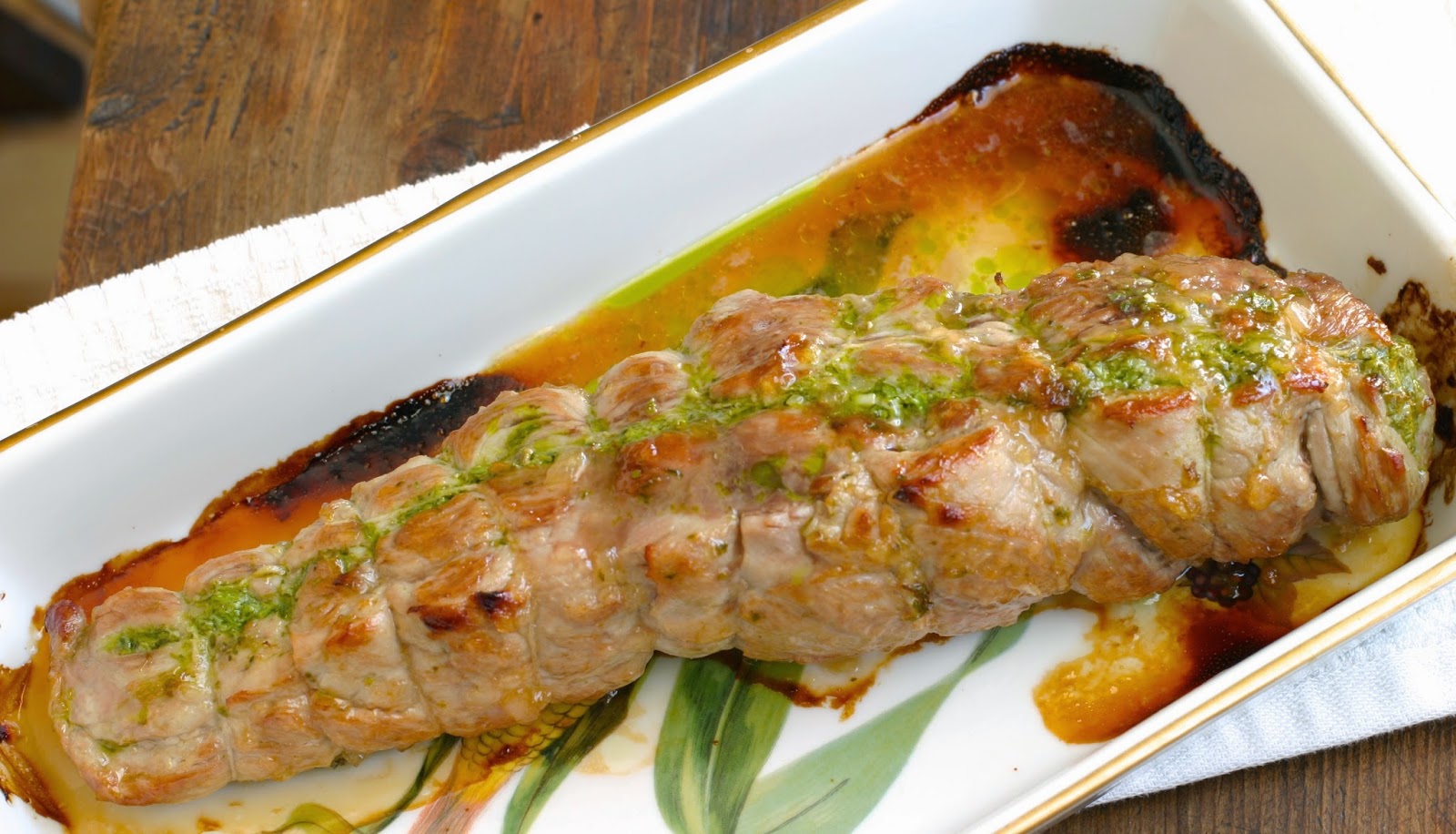
Pork Tenderloin Stuffed with Fiddlehead Pesto


I am still finding fiddleheads in the nooks and crannies of my freezer. Last spring I put together a bulk order from my little town and brought in 25 pounds of these delicate fern tips from the boreal forests of Northern Saskatchewan. I pickled a few to sell at the market. They were a curiosity and sold well. I find that a few pickled fiddleheads add an artistic touch to a charcuterie platter.

In addition to buying more than I really needed for myself there were a couple of no-shows on pick up orders. Hence, the freezer stash.

For no particular reason I have always thought these to be uniquely Canadian or at least North American. My Canadian born cousin living in New Zealand was baffled by fiddleheads until I gave a description. I have since been introduced to pikopiko ferns, as the Maori call them. This pesto is inspired by a Maori recipe.

The tenderloin would benefit from a generous crust of sea salt and coarse black pepper. I failed to think of this until it was on my fork. The pesto is not salted, other than the Parmesan cheese.

Removing the silver skin from the tenderloin takes this dish from the ordinary to the gourmet. Silver skin does not tenderize with cooking.

I was delighted to find that the unique flavour of the fiddleheads does shine through. It isn't simply a flavourful stuffing but also a delightful way to serve a vegetable.

The pesto recipe can fill three tenderloins. If you are only cooking one save the remainder to use on flatbreads and crostini just as a basil pesto might.


Pork Tenderloin Stuffed with Fiddlehead Pesto

1 pork tenderloin
1 recipe Fiddlehead Pesto


 Remove silver skin. It will not tenderize with cooking. Slit the tenderloin open.


Fill with pesto and tie shut. Season generously with salt and cracked pepper.


Heat canola oil in a large heavy bottomed pan. Brown the tenderloin on all sides. Then place in a 350F oven until it reaches an internal temperature of 160F. Remove from oven and tent with foil to rest for 10 minutes. Slice and serve with any juices that collected on the bottom of the dish.


 Fiddlehead Pesto


3 cups of boiling water with a pinch of salt
250g frozen or fresh fiddlehead greens, approx. 2 cups
1/3 cup olive oil, add more if needed
3 tablespoons crushed pine nuts or walnuts
3 garlic cloves, finely minced
1/4 cup grated parmesan cheese

Cook fiddleheads in boiling water with salt 8 minutes, drain very well. Set aside.


Crush nuts and garlic in a mortar and pestle. Add to a food processor. Add fiddleheads, olive oil and parmesan cheese. Process until smooth. Presto. You are done. Use as desired.

2.4.15

Slow Cooker Cross Rib Roast and my first time making Yorkshire pudding

I rarely use my slow cooker but this organically raised beef cross rib roast neededr longer cooking with moist heat. By the way, I won this slow cooker from cookbook author, foodista and blogger Julie at Dinner with Julie in Calgary. That was shortly after moving into my house five years ago. Sorry Julie, I have hardly used it. However, I do love it to make stock.

Celery is finally taking its place on the dinner plate. Why not? It's tasty, nutritious and cheap!

This is my first attempt at Yorkshire pudding. The batter is easy enough to make but I believe the technique is in the preheating of the muffin pan. And possibly in having just the right consistency of the batter. I used rendered fat. My freezer container wasn't labelled so not sure if it was chicken or beef or ? Whatever it was it was flavourful.

Mine were fine but I would have liked to see them rise higher. Perhaps the oven should have been hotter. Or perhaps I used a bit too much flour. Still, I enjoyed them smothered in pan gravy with my beef roast.

Garlic Herbed Cross Rib Roast


Cross rib is a less tender cut and lean. It requires a long moist cooking method to tenderize it. After rubbing the meat with oil and herb mixture, sear it in a hot cast iron pan before cooking fully in the slow cooker.

3 cloves garlic, coarsely chopped
1 tablespoon each of dried rosemary, oregano, sage,  thyme and coarse sea salt
1 teaspoon coarsely ground black pepper
camelina oil
2 - 3 pound cross rib roast
1/2 cup red wine
1/2 cup beef stock

potatoes
celery
1 tablespoon flour

Preheat a cast iron skillet over medium heat.

Mix herbs, salt and pepper in a small bowl. Blot meat with paper towel and then rub with oil before pressing the herb mixture onto it.

Add a tablespoon of oil to the preheated pan and sear the meat on all sides.

Place meat in slow cooker. Add wine and water to the cast iron pan and scrape up all the tasty bits. Add this to the slow cooker and cover with lid. Cook on high for 4 hours.

Add the potatoes, cut into 2-inch cubes or use baby potatoes. Wash celery and peel the stringy side. Cut into 4-inch pieces. 30 minutes before the meat is done add potatoes and celery. Also add flour to a quarter cup of cold water and add at the same time.

Yorkshire Pudding

1 heaping cup of all purpose flour
1/4 teaspoon salt
1 cup milk
2 eggs
6 teaspoons of lard, butter, rendered fat or oil

Add all ingredients to blender and process until smooth. Leave at room temperature for an hour.

Preheat oven to 375 F. Place muffin pan in the oven to preheat it, as well. After about 10 minutes add a teaspoon to each of six muffin molds. Continue to preheat for another 5 to 10 minutes.

Pour batter into each muffin mold equally and bake in the oven for 25 to 30 minutes, or until golden.
Serve immediately.

24.3.15

Penne with Goat Cheese and Squash

What are your pantry essentials? Pasta is one of mine. I like having a few different kinds on hand for quick meals. Nuts and garlic are always in my kitchen, also. The trick is to put it all together in new and interesting ways.

I finally found kabocha squash in the grocery store and chevre was on sale. My inspiration for tonight's meal came from a restaurant menu. I have no idea how they put it all together but this is my take on their goat cheese and squash first course.

Penne with Goat Cheese and Squash

1 squash, kabocha or butternut
olive or canola oil
1 c. penne
3 tbsp. soft goat cheese or chevre
2 tbsp. Greek yogurt
2 tbsp. finely grated parmesan cheese
1/2 tsp. dried Espelette pepper flakes
1/4 tsp. dried oregano
1 clove garlic
2 tbsp. chopped walnuts
salt and pepper

Cut squash into sections and scoop out seeds. Lightly oil a baking sheet and also lightly oil the squash segments. Season squash with salt and pepper. Arrange on baking sheet and roast at 350F until tender, about 20 minutes.

Coarsely chop the garlic and walnuts. Place on the baking pan with the squash. You will have to watch that these do not burn. Take them off the baking sheet when toasted and set aside.

Meanwhile boil the pasta in plenty of salted water until tender. Drain, reserving about a cup of the cooking water. Add goat cheese to drained pasta and cover the pot with the lid. Let it sit for a few minutes so the cheese melts. Add yogurt, oregano and pepper. Stir to mix. Cover and set aside until ready to serve.

When the squash is tender remove from the oven. Let it cool for a minute or two then peel the skin and chop about a cup of it into one-inch cubes.

Give the pasta a quick stir before plating. If it has become thick, add a little of the cooking water to loosen it up. Split the pasta between two plates or bowls. Top with squash and garnish with toasted garlic and walnuts. Serves 2.


18.3.15

Saucy Cajun Round Steak


A nicely cooked and satisfying home dinner in my home is more elusive than most would imagine. True, I am posting delicious looking food every few days. In reality many of these dishes are prepared for my newspaper column. 

After spending up to two hours photographing the food it is hardly appetizing. Leftovers are often frozen for work lunches. Many recipes are theoretically good to freeze but in actuality the quality is compromised. What I am saying is that I take a taste of the freshly made food but most times I am eating leftovers.

Then there the times that I am testing a recipe and, how do I say this politely, I don't like it. But someone else might like it. Most times I suggest changes that I feel will improve the dish. A quality, nutritious, delicious meal is long overdue.  

I don't mean to say that a meal isn't a meal without meat but it has been a long time since I have made a nice beef meal. And I don't mean to hint that because I am watching calories that I have not had a real meal. I am finding great satisfaction in simple, nicely cooked food eaten mindfully.

What I mean is that I have not had real food in the house for a couple of days and yesterday I resorted to a KFC supper.  Who hasn't done that?

This is an inner round cut steak which means it is a less tender cut. Less tender cuts are from the muscles that are used more. They require long, moist heat to tenderize and bread down the connective tissue that makes this meat tough.

The less tender cuts are usually more flavourful and always lower in fat. They are less expensive and they are equally as nutritious as the most tender, high priced steak. 

Any sweet green pepper can be used. The Anaheim green pepper is mildly hot and is often used in making chile relleno. If left in the field it will ripen to orange and red. I found this one for half price in the produce department the other day and making this dish even more cost friendly.

To be clear, I love this meal. The seasoning is balanced and not spicy. The sauce pairs very well with a plain basmati rice. Add a vegetable or two and you have a nutritionally balanced meal. 

Saucy Cajun Round Steak

1/4 c. all purpose flour
1/4 tsp. each salt and pepper
1 lb. inside round marinating steak
1 tbsp. canola oil
2 onions, sliced
2 tsp. Cajun seasoning 
1 tsp. dried thyme
1/4 c. tomato paste
1 1/2 c. beef stock
2 Anaheim green peppers
2 green onions, for garnish
2 tbsp. chopped fresh parsley, for garnish

In large plastic bag, shake together flour, salt and pepper. Cut steak into 8 pieces. One piece at a time, seal steak in bag; pound with meat mallet to 1/4-inch thickness, working flour mixture into meat. Reserve any remaining flour mixture.

In Dutch oven, heat oil over medium-high heat. Brown meat well, in batches if necessary. Remove to plate.

Add onions, garlic, celery, Cajun seasoning and thyme. Cook, stirring, until onions are softened, about 5 minutes. Sprinkle with any reserved flour mixture. Cook, stirring, for 1 minute. Whisk tomato paste into stock and pour into pan. Return steaks and any accumulated juices to pan.

Cover and simmer over low heat, turning steaks halfway through, 1 hour and 45 minutes. Add green pepper. Simmer, covered, until steaks are fork-tender and green pepper is tender-crisp, about 15 minutes. Sprinkle with green onions and parsley.

15.3.15

Root Vegetable Tarte Tatin from Epicurious


This recipe came in my email inbox this week from Epicurious. Their picture was stunning and enticed me to try it as soon as I possibly could. I have to say that adding pastry to anything takes it up a notch, both visually and for its gustatory enjoyment.

This is a dish that deserves a place at a vegetarian meal as the entrée. Most people like a little brown sugar on their sweet potatoes. Me, I like butter. Next time I would skip the carmelized sugar in the bottom of the pan. It was too sweet for my taste.

I prefer to use my cast iron pan for tarte tatin. It is essentially a pan that releases well without using a lot of fat. It holds the temperature nicely and the dark colour allows for optimal browning of pastry.

Having said that, this did not completely come out of the pan for me. I think I left it a tad too long and would be better inverted on a serving plate while it is still bubbling a bit. Some of the sweet potato slices stayed in the pan but were easy enough to take out with a spatula and arrange atop the pie.

Root Vegetable Tarte Tatin
  • 1 medium Yukon Gold potato, peeled, sliced into 1/2" rounds
  • 1 medium sweet potato, peeled sliced into 1/2" rounds
  • 2 medium carrots, peeled, sliced into 1/2" rounds
  • 1 medium parsnip, peeled, sliced into 1/2" rounds
  • 1 small red onion, sliced into 1/2" rounds
  • 1/4 cup olive oil
  • Kosher salt, freshly ground pepper
  • 1/3 cup sugar
  • 1 tablespoon white wine vinegar
  • 1 1/2 teaspoons chopped fresh rosemary
  • 1 1/2 teaspoons chopped fresh sage
  • 4 ounces fresh goat cheese
  • butter pastry for single crust pie
  • All-purpose flour (for surface)
Place a rack in lower third of oven; preheat to 400°. Toss potato, sweet potato, carrots, parsnip, and onion with oil on a rimmed baking sheet; season with salt and pepper and arrange vegetables in a single layer. Roast until golden around the edges and tender, 30-35 minutes. Let cool.

Meanwhile, cook sugar and 2 tablespoons water in a small saucepan over mediumhigh heat, swirling pan occasionally, until mixture is amber-colored, 5-7 minutes. Remove from heat and add vinegar and a pinch of salt, swirling pan to combine. Quickly pour caramel into a 9"-diameter pie pan; tilt and rotate pan to evenly coat bottom with caramel. Scatter rosemary and sage over top.

Arrange potatoes, carrots, and parsnips snugly in a single layer on top of caramel, using smaller carrot and parsnip pieces to fill in any holes. Scatter onion rings and crumble goat cheese over vegetables.

Roll out dough on a lightly floured surface to a 12" round. Drape over vegetables, tucking edges into pan. Prick dough all over with a fork. Bake until crust looks dry, about 20 minutes; reduce heat to 350° and bake until crust is golden brown, 15-20 minutes.

4.2.15

Pigeonneau Fermier Roti aux Epices Douces

This month we are going to the Oscars. Food can be associated with most movies in one way or another. I like the real hard-core food movies. The only movie, not only foodie movie, but the only movie I saw this year was the One Hundred Foot Journey. It was nominated for the Golden Globes but didn't meet Oscar competition.

Anyhoo, we are here to sit down and enjoy more wonderful food.

I made the 'oh so' elegant Pigeonneau Fermier Roti aux Epices Douces. Yes, this translates as pigeon. The culinary world has chosen a more appealing moniker of squab. Wouldn't we rather eat squab than pigeon? Pigeonneau is a young pigeon.

This recipe was the test for the young Indian chef to work with restaurateur Helen Mirren. He earned the restaurant a third Michelin star.

These restaurants were literally across the street from each other, hence, the one hundred foot journey. He left his family's Indian restaurant to serve haute cuisine and move his career forward.

The sauce with this dish is dazzling. This will be on my fine dinner 'go to' list of choice. And it you think you can forget the madeira, in one word, don't. The subtle sweetness adds another layer of complexity to the flavour.

I did not find pigeon and used pheasant as a substitute. It was delicious.


Into the Woods Bean Soup  with Jerry at A Life, Lived. Movie inspiration is, of course, Into the Woods.

Pimento Cheese Sandwiches from Shelby at Grumpy's Honeybunch. Movie inspiration is Shelby's all time favourite movie, The Help.

Cranberry Orange Trifle by Val at More Than Burnt Toast. The movie inspiration is The Queen with Helen Mirren. She is popular. She is also the leading actress in One Hundred Foot Journey.

Fontal Polenta with a Mushroom Saute is Sandi's contribution from The Whistlestop Cafe. Her movie inspiration is Eat, Pray, Love.


Pegonneau Fermier Rȏti aux Epices Douces

2 tablespoons butter
fine salt
freshly ground black pepper
Preheat oven to(400 °F). Melt the butter in a frying pan over high heat. Season pigeon halves with salt and pepper. Brown one side. Turn the halves over, and place the pan in the oven. Cook for 7 minutes.
Place the baked pigeon halves on a plate, tent with foil, and set aside to rest for five minutes. While the pigeon is resting, continue to reduce the sauce until thickened. Taste the sauce and season with salt, as required. Also, place the serving plates with the vegetables in the oven for a couple of minutes until the vegetables are reheated.
When the meat has rested, slice each half on the bias in four places. Arrange the pigeon slices on the serving plates. Top with the reduced sauce.


Sauce de Pigeonneau
1 small shallot, minced
1 tablespoon butter
100 milliliters Madeira wine
150 to 200 milliliters fond de pigeonneau
Fond du Pigeonneau
bones from 2 young pigeons (squabs)
1 plum tomato, seeded and chopped
1/2 white onion, chopped
1 small carrot, peeled and chopped
1/2 stalk celery, peeled and chopped
Preheat oven to 260 °C (500 °F). Scatter the reserved bones in a baking dish and bake for 15 minutes.
Scatter the vegetables over the bones and bake for an additional 15 minutes.
Transfer the cooked bones and vegetables to a saucepan. Add some water to the roasting pan and deglaze over heat. When all the caramelized partials are loose, transfer them along with the water to the saucepan.
Add sufficient water to the saucepan to cover the bones plus another 50 percent. Bring the water to a boil. Reduce heat to simmer. Simmer the contents for about 2 hours until the liquid is reduced by half. Skim any scum that forms on the surface. When reduced, strain the stock through a strainer and then through a chinois. Check the volume of the stock. If it is greater than about 200 milliliters, reduce further. Refrigerate strained stock until needed. Remove and discard any fat that congeals during cooling.
 
Sweat the shallot in butter in a saucepan over low heat.
Add the Madeira wine and reduce almost totally. Add the fond de pigeonneau and reduce substantially. Strain and return the sauce to the saucepan. Finish reducing the sauce per the main recipe.

13.12.14

Oven Roasted Rainbow Trout

There is something about whole fish that impresses dinner guests. Usually I like to grill over wood charcoal but sometimes, in the winter, I want to stay cozy in my kitchen.

Any whole fish can be used. Arctic char or salmon work well. Quickly grilling the orange slices in a dry hot pan before garnishing adds more interest to their appearance and caramelizes the sugars for a more complex flavour.

I make my wild rice pilaf with mostly wild rice and some white basmati rice. In a cast iron pan saute finely chopped shallots, wild mushrooms, dried cranberries and pumpkin seeds before adding the rices. Lay the fish over and serve right in the cast iron pan.

This would be great on Christmas Eve for the feast of the seven fishes.
Roasted Rainbow Trout with Orange and Thyme

1 2-lb. whole rainbow trout, scaled, gutted, and cleaned
Kosher salt and freshly ground black pepper, to taste
3 sprigs thyme
2 sprigs flat-leaf parsley
1/2 orange, sliced into thin rounds
1/4 c. extra-virgin olive oil
2 tbsp. fresh orange juice
Heat oven to 450 F. Season the trout cavity with salt and pepper, and stuff it with thyme, parsley and orange slices. Using kitchen twine, tie the trout crosswise spacing two inches apart. Rub trout with one tablespoon of oil, and then transfer it to an aluminum foil lined baking sheet. Bake trout, turning once with a metal spatula, until cooked through and golden brown on the outside, about 15 minutes.

Meanwhile, whisk the remaining oil with the juice in a small bowl and season with salt and pepper. Remove twine from the trout and garnish with more orange slices. Drizzle with sauce before serving.

4.12.14

Poached Cod with Pernod Saffron Broth

This picture perfect dish was my lunch today. I must confess that I am not the chef. Friends Meredith and Gary invited me to their Sooke acreage for lunch. The drive from Victoria is intoxicating as it winds through rocky mixed coniferous and deciduous forests and eventually exposing peek-a-boo views of harbours and inlets along the Strait of Juan de Fuca.

I always feel recharged when I visit. Their quaint home lies in a cozy clearing surrounded by forest and gardens providing complete privacy.  The Sooke River is the back boundary of their plot. Water is a calming feature and a reminder of life, Mother Nature and the seasons. Growing up on the farm one of my favourite summer vacation diversions was to bicycle to the creek about three miles down the road. By the end of harvest it was barely a trickle in contrast to the overflowing banks in spring.

I am envious of the bay tree and fresh plucked leaves anytime they are called for. Meredith and Gary have lived here for a very long time and together have created this respite from the world. Meredith asked for a bay leaf and Gary came back from the garden with fresh thyme. I was perplexed. After pulling the leaves from the stems and adding them to the poaching liquid Meredith added bay leaves. I pondered this throughout the leisurely meal and after until I realized that after many years of marriage, raising a family and lovingly maintaining their home, perhaps they sometimes work together as one. Obviously Gary knew she had bay leaves already but no thyme so, of course he picked thyme. Either that or I completely missed something.

Meredith carefully followed the recipe from the folded magazine and checked from time to time when I would have thrown it all together. The result was perfection. I had to find this recipe and save it. Although the fresh fish and seafood are not always available where I live I think that frozen cod would be acceptable. The clams not so much so but the dish would still be lovely even without clams.

An added bonus for me was to be able to take pictures with a fully set table. I rarely have that opportunity. It makes for an interesting photograph and allows for different shooting angles with background interest.

As an aside, if you are dreaming of visiting Vancouver Island this is a beautiful spot to spend a week. Gary and Meredith have a private totally equipped cottage on their property that they rent out. So if you would be romanced by a quaint cottage in the woods backing onto a river within a five minute drive to the beaches on the Strait of Juan de Fuca and 40 minutes to the city, make a note of this.
Poached Cod with Pernod Saffron Broth       adapted from Fine Cooking

4 5-oz. cod fillets (preferably 1 inch thick) 
Kosher salt and freshly ground black pepper  
3 tbsp. extra-virgin olive oil 
1 small fennel bulb (about 3/4 lb.), trimmed (leave core intact) and cut into 1/2-inch wedges, plus 1 tbsp. chopped fronds  
2 large cloves garlic, finely chopped 
1 medium-large shallot, chopped  
2 8-oz. bottles clam juice 
8 oz. small baby red or fingerling potatoes, scrubbed and sliced into 1/8-inch-thick coins, ends discarded (about 6 potatoes)  
1 large tomato, cut into small dice (12 oz., about 1-1/2 cups) 
2 tbsp. anisette liqueur, such as Pernod or Sambuca  
1 bay leaf 
1 large sprig fresh thyme  
1/4 tsp. roughly chopped or coarsely ground fennel seed 
A generous pinch of saffron, crumbled (about 25 threads)  
12 littleneck clams, scrubbed 
1-1/2 tbsp. chopped fresh flat-leaf parsley leaves
 
Position a rack in the center of the oven and heat the oven to 325 F. Season the cod with salt and pepper. Let it sit at room temperature while you prepare the braising mixture.

Heat the olive oil in a 12-inch ovenproof skillet over medium-high heat. Add the fennel, sprinkle with a pinch of salt and pepper and brown on both sides, about 5 minutes total. Remove the pan from the heat and transfer the fennel to a plate. Put the pan over low heat and add the garlic, shallot, 1/2 tsp. salt, and 1/4 teaspoon pepper. Cook, stirring, until just softened, 1 to 2 minutes.

Add the clam juice, potatoes, tomato, liqueur, bay leaf, thyme, fennel seed, and saffron to the skillet. Raise the heat to medium and bring to a simmer. Simmer for 3 minutes to start the potatoes cooking. Nestle the cod pieces and clams into the sauce, piling the fennel on top of the fish and making sure all of the potatoes are submerged. Tightly cover the pan with a lid or aluminum foil and poach in the oven until the fish is almost cooked through, 10 to 15 minutes, depending on thickness.

With a slotted spatula, transfer the cod to 4 shallow bowls. Bring the braising liquid, clams, and vegetables to a brisk simmer on top of the stove, cover the pan, and cook until the clams are opened and the vegetables are tender, 3 to 6 minutes more. Divide the opened clams (discard any unopened ones) and vegetables among the bowls. Add the fennel fronds and parsley to the braising liquid in the pan. Bring to a simmer and pour over the fish and vegetables.

Crusty garlic bread served alongside is perfect for soaking up the flavorful sauce.

1.12.14

Baked Potato with Smoked Salmon Sour Cream

Baked potatoes are generally reserved for the hot days of summer, not these icy winter days. But I have found a way to bring the simple baked potato into the season. This smoked salmon cream cheese baked potato can be lunch, brunch or dinner. I would ever consider it for breakfast. So simple and tasty.

Oven bake foil wrapped potatoes and served with a healthy spoonful of this sour cream mixture.

Smoked Salmon with Sour Cream
1 pound hot-smoked boneless salmon, divided
3/4 cup sour cream
1 teaspoon finely grated lemon rind
1 tablespoon fresh lemon juice
1/4 teaspoon freshly ground black pepper
1/4 cup chopped fresh chives
Place half of salmon, sour cream, rind, juice and pepper in a food processor. Process until smooth. Transfer mixture to a bowl.
Coarsely chop remaining salmon, and fold into salmon mixture. Gently fold in 1/4 cup chives. Cover and chill. Garnish with additional chopped chives, if desired.

1.11.14

Veal Osso Buco with Burnt Orange and Campari

From time to time I am reminded that people do read my blog. I do have followers. And to them I send my sincere apologies for being so inconsistent in posting. I struggle with time management. The farmers' market is over for the season but I continue to do lots of cooking even if it doesn't appear here.  I am always recipe testing for the Western Producer articles but my day to day cooking at the moment tends to be sporadic and uninspired.

Today I find my inspiration in one of my earlier cooking classes from November, 1996 at The Cookbook Company in Calgary. I remember the date because I bought the cookbook and inscribed the details inside the front cover. A man who became one of my favourite chefs prepared the meal that evening in a 'kitchen come cavern' in the basement of the popular cooking shop. I loved that space and wonder how it is used today. Classes are now in a larger main floor kitchen with natural light streaming highlighting crystals in the granite counters. It is bright, spacious and more of a kitchen than a dining room.

John Bishop, chef and owner of the perennially popular Bishop's Restaurant in Vancouver, was the presenter. This, taken from his restaurant website, sums up his persona perfectly ...

"Thoughtful, sincere and unassuming yet an unswerving perfectionist. John is a consummate host who in 22 years of business, has placed his brand of understated West Coast cuisine firmly on the map."
Tim Pawsey, Northwest Palate Magazine


Still after all these years he stands tall among chefs and he mentors new and experienced chefs alike.  

I have not made this recipe in a long, long time. A bottle of Campari in my cold room, beautiful veal shanks in my freezer and oranges in my refrigerator tell me it is about time I fill my kitchen with these warm aromas on this shivery cold autumn day.

Campari is generally associated with a thirst quenching summer cocktail. Its bittersweet herbal flavour is an acquired taste. A traditional pairing is orange juice so it does not surprise me at all to find oranges in this recipe. Carmelizing the orange slices layers on more complex flavours.
Serve over risotto with pan juices.

Veal shank is a less tender cut and requires long, moist cooking. If you have the time, do it this way. If time is not available a pressure cooker prepares perfectly good results. This can be served with a pasta such as fettuccine or a lentil ragout but the traditional Risotto alla Milanese is still my favourite.

Veal demi-glace is impossible to come by in a small town and making it is just about as impossible due to the scarcity of veal bones. Veal in any form is not readily available. The demi-glace is essentially a veal stock made in a traditional way and reduced to produce a more concentrated stock. I simply substitute more chicken stock.


And do not let the bone marrow find its way to the garbage. Dig it out with a little fork or knife and slather it on crusty bread for an additional treat.

Veal Osso Buco with Burnt Orange and Campari
adapted from Bishop's the cookbook

4 lbs. veal shanks, cut 1 1/2 inches thick
1 orange
1 c. red onions, finely diced
1 c. carrots, finely diced
1 c. celery, finely diced
4 garlic cloves
2 tbsp. fresh rosemary leaves
3 1/2 oz. Campari
2 c. veal demi-glace
1 c. chicken stock

Preheat oven to 350 F. Use a sharp knife to score the outside of the veal shanks, to help stop the meat from curling up while cooking.

Place the shanks in a large pot and cover with cold water. Bring to a boil and simmer for 30 minutes. Skim off any scum that rises to the surface. Remove the shanks from the water and arrange in a roasting pan.

Slice the orange and sear in a hot frying pan, until golden in colour. Cover the blanched shanks with the orange slices, diced vegetables, garlic and rosemary. Pour the Campari over top.

In a saucepan, combine the demi-glace and chicken stock and bring to a boil. Pour over the shanks.
Cover the roasting pan with foil and place in the oven for 80 minutes.

To serve, place the veal shanks and sauce in large soup plates or bowls. This can also be served plated with risotto.

25.3.14

Oven Back Ribs with Baked Beans


Real ribs are made in a smoker cooking low and slow. It is winter and I don't feel like lighting up the barbecue. These ribs made in the oven are pretty darned good, too.

Baked beans are an excellent side dish. I made them in a slow cooker.  Rather than soaking the beans overnight and slow cooking them all day I did the opposite. It was mid-day before I thought to make them. I put them to soak and before I went to bed I assembled all the ingredients in the slow cooker and let them cook all night. The only drawback is that around 2am I was awakened by the wonderful aroma. If they had been ready I would have eaten a meal then and there. Glad they weren't done!


Oven Pork Baby Back Ribs

Rub
1/2 tbsp. smoked paprika
1/2 tbsp. ground coriander
1/2 tbsp. ground cumin
1/2 tbsp. kosher salt
1/2 tbsp. black pepper
1/2 tbsp. ground ancho chiles
1/2 tbsp. dry mustard
1/2 tbsp. dried oregano
1/4 c. canola oil

Mix all spices together in a small bowl. This makes enough for 2 racks of ribs.

Prepare the ribs by removing the shiny thin skin on the back called the silver skin. Trim off  2 or 3 ribs from the small end and 1 rib from the large end to make a more even rack. It will cook more evenly. The cut pieces can be cooked along with the racks.

Brush ribs with oil and rub with spice mixture. Place in a plastic bag for at least 2 hours or up to overnight.

When ready to cook, preheat oven to 300F. Place ribs on a baking sheet and bake in oven. After the first hour, baste with the 'mop'. Baste again after an hour. After 3 - 4 hours baking they should be ready to serve.

Mop
This is a basting liquid to keep the ribs moist while they slowly cook. It is traditionally applied with a brush called a mop.

1/2 c. barbecue sauce
1/4 c. apple cider vinegar
1 tbsp. light brown sugar
2 tbsp. apricot jam
1/4 c. apple or apricot juice or water

Bring to a boil over medium heat to melt all ingredients and cool to room temperature.


Baked Beans
Panela is a Mexican unrefined natural sugar. It has a molasses flavour. Substitute with 1/4 cup brown sugar and 1 tablespoon molasses.
3 c. dried navy beans
1/4 c. panela brown sugar
1 c. low sodium tomato juice
1/2 lb. pork belly or thick cut bacon, chopped
2 c. chopped yellow onion
2 tbsp. Worcestershire sauce
1/2 tsp. dry mustard
1 dried chipotle pepper
2 tsp. salt
Pepper, to taste
Water

Soak the beans overnight in enough water to cover by 3 inches. Drain.

Add tomato juice, panela, salt, pepper, Worcestershire sauce, dried pepper and dry mustard in slow cooker set on high with the lid on until the sugar is dissolved.

Layer the soaked beans with the bacon and onion. I make about 3 layers. Add enough water to cover the beans. Cook on low for 6 - 7 hours or until tender.