

 |
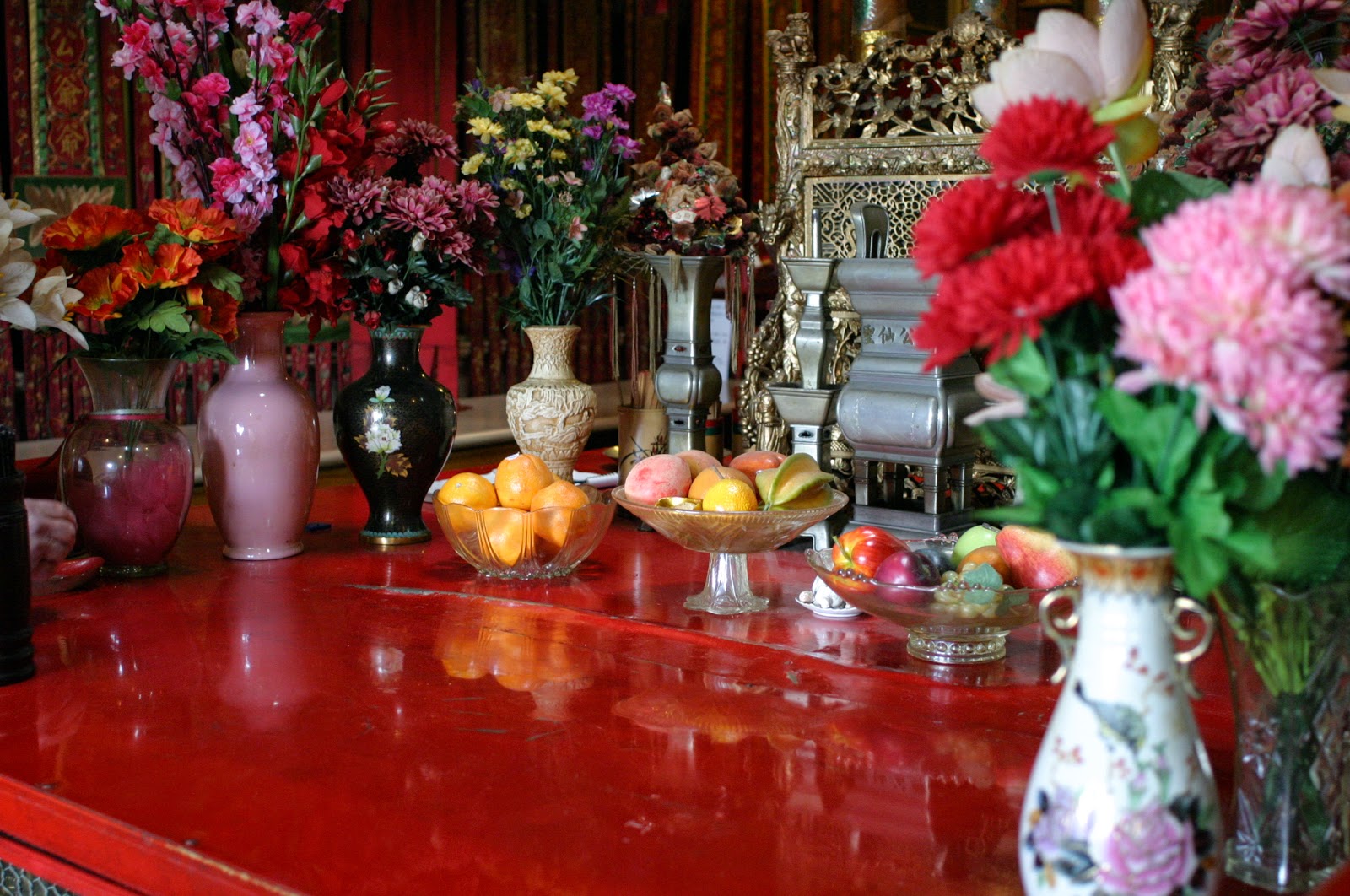
| Offerings of fresh fruit. |
It is most disappointing to hear of the inequities in life that these immigrants experienced. Chinese people were not allowed to be architects and as a result the buildings were designed by mainly British architects. As a result the style is not true but seen through the lens of another culture. Apartheid in the schools was declared and revoked. To maintain a sense of their heritage a Chinese School was built and attended after regular school hours and on weekends. Classes are still held here to teach language and culture.
 |
| Ancient gong and bell were brought from China for this temple. |
The tour was filled with real historical facts from the migration, family and school life, gambling houses, opium dens and sadly the disintegration of Chinatown. The city of Victoria has recognized this special historical aspect and is now restoring and redeveloping with a sensitivity to the past.

I loved burrowing into the narrow alleyways to see behind the store fronts. Today's development is mirroring the old days by reconstructing a vibrant culture behind the store facades. I knew about Fan Tan Alley but there are many more alleyways.
 |
| This is a picture of new development in the back alleys of modern day Chinatown. There are residential condos and business spaces on the ground level. |
We visited the first and oldest Hakku temple in Canada founded in 1905. The Hakku are from northern China. Once again our tour guide painted a vivid picture of life around the temple, in the past and in today's life. Although the temple is not as important now in the day to day life of the Chinese it is important for family celebrations and maintaining a sense of history for the young.
 |
| The exterior is very unassuming. The temple is on the top floor. Rental apartments and meeting rooms occupy the rest of the space. |

