Cooking Classes

Showing posts with label poultry. Show all posts

4.2.15

Pigeonneau Fermier Roti aux Epices Douces

This month we are going to the Oscars. Food can be associated with most movies in one way or another. I like the real hard-core food movies. The only movie, not only foodie movie, but the only movie I saw this year was the One Hundred Foot Journey. It was nominated for the Golden Globes but didn't meet Oscar competition.

Anyhoo, we are here to sit down and enjoy more wonderful food.

I made the 'oh so' elegant Pigeonneau Fermier Roti aux Epices Douces. Yes, this translates as pigeon. The culinary world has chosen a more appealing moniker of squab. Wouldn't we rather eat squab than pigeon? Pigeonneau is a young pigeon.

This recipe was the test for the young Indian chef to work with restaurateur Helen Mirren. He earned the restaurant a third Michelin star.

These restaurants were literally across the street from each other, hence, the one hundred foot journey. He left his family's Indian restaurant to serve haute cuisine and move his career forward.

The sauce with this dish is dazzling. This will be on my fine dinner 'go to' list of choice. And it you think you can forget the madeira, in one word, don't. The subtle sweetness adds another layer of complexity to the flavour.

I did not find pigeon and used pheasant as a substitute. It was delicious.


Into the Woods Bean Soup  with Jerry at A Life, Lived. Movie inspiration is, of course, Into the Woods.

Pimento Cheese Sandwiches from Shelby at Grumpy's Honeybunch. Movie inspiration is Shelby's all time favourite movie, The Help.

Cranberry Orange Trifle by Val at More Than Burnt Toast. The movie inspiration is The Queen with Helen Mirren. She is popular. She is also the leading actress in One Hundred Foot Journey.

Fontal Polenta with a Mushroom Saute is Sandi's contribution from The Whistlestop Cafe. Her movie inspiration is Eat, Pray, Love.


Pegonneau Fermier Rȏti aux Epices Douces

2 tablespoons butter
fine salt
freshly ground black pepper
Preheat oven to(400 °F). Melt the butter in a frying pan over high heat. Season pigeon halves with salt and pepper. Brown one side. Turn the halves over, and place the pan in the oven. Cook for 7 minutes.
Place the baked pigeon halves on a plate, tent with foil, and set aside to rest for five minutes. While the pigeon is resting, continue to reduce the sauce until thickened. Taste the sauce and season with salt, as required. Also, place the serving plates with the vegetables in the oven for a couple of minutes until the vegetables are reheated.
When the meat has rested, slice each half on the bias in four places. Arrange the pigeon slices on the serving plates. Top with the reduced sauce.


Sauce de Pigeonneau
1 small shallot, minced
1 tablespoon butter
100 milliliters Madeira wine
150 to 200 milliliters fond de pigeonneau
Fond du Pigeonneau
bones from 2 young pigeons (squabs)
1 plum tomato, seeded and chopped
1/2 white onion, chopped
1 small carrot, peeled and chopped
1/2 stalk celery, peeled and chopped
Preheat oven to 260 °C (500 °F). Scatter the reserved bones in a baking dish and bake for 15 minutes.
Scatter the vegetables over the bones and bake for an additional 15 minutes.
Transfer the cooked bones and vegetables to a saucepan. Add some water to the roasting pan and deglaze over heat. When all the caramelized partials are loose, transfer them along with the water to the saucepan.
Add sufficient water to the saucepan to cover the bones plus another 50 percent. Bring the water to a boil. Reduce heat to simmer. Simmer the contents for about 2 hours until the liquid is reduced by half. Skim any scum that forms on the surface. When reduced, strain the stock through a strainer and then through a chinois. Check the volume of the stock. If it is greater than about 200 milliliters, reduce further. Refrigerate strained stock until needed. Remove and discard any fat that congeals during cooling.
 
Sweat the shallot in butter in a saucepan over low heat.
Add the Madeira wine and reduce almost totally. Add the fond de pigeonneau and reduce substantially. Strain and return the sauce to the saucepan. Finish reducing the sauce per the main recipe.

6.11.13

The Canadian Harvest as seen on the Prairies

Harvest has many faces on the prairies. Until last evening I had fully intended to write only about the local grain and lentil harvest. However it is hunting season and my hunting guide friend called with a couple of pheasants for me.

When the call comes you must put everything else aside and move into action immediately. The birds were harvested just minutes earlier and need to be processed right away. Birds can be hung to age but I have not yet learned the proper techniques. I have never heard of anyone in this part of the country hanging birds to age so I have to learn through my blogging friends.

Last year was my first time since living on the farm as a child that I have to plucked and eviscerated a bird. It was a feeling of accomplishment that I could draw on those past memories to get the job done.

Pheasants have very delicate skin and plucking is a challenge. My hunter friend suggesting skinning the birds. Usually hunters only 'breast' the bird but I don't like to see anything go to waste and I want the legs and thighs.

I save the tail feathers because they are so beautiful. They make a nice addition to my Christmas wreath. I wish I could keep all the colourful feathers. Following the pheasant recipes I have pictures of harvest on the prairies.

So, the birds are ready and in the refrigerator. I separated the leg and thighs for confit and they are curing as I write. Tomorrow I will poach them in canola oil. Once prepared they will keep in the refrigerator for up to a month or frozen for 3 months. Confit legs can be served with a wild mushroom risotto. I like to make a sort of paté called pheasant rillettes and pack it into a ramekin and serve with fresh baguette.

The good news for the conservationist in me is that pheasant hunting is sustainable. I had not thought about it but only the roosters are harvested. That allows the hens to reproduce. Hunters can easily distinguish between a rooster and a hen. Pheasants are easily reared in captivity and released into the wild to boost the population. For those reasons they are a sustainable bird for hunting.

The Best Pheasant Stock and Soup Ever

500ml serves 3 to 4 people

THE STOCK

■ Raw pheasant carcasses or leftover bones from a roast
■ Per carcass: an onion (skin on, cut in half and pierced with 2 cloves), 1 stick celery, 1 unpeeled carrot, 2 peppercorns and 1 bay-leaf
■ Some water

You will have noticed that most of these re-cipes use breasts or pot roast a whole bird. So what do you do with the rest of the pheasant carcass or the leftover bones? I am a great advocate of making stock. So this is a two-part recipe - first stock and then soup. My granddaughter swears that the latter is a sovereign remedy for curing colds; and it is true that it is a sort of version of Momma's Jewish Chicken Soup. Whatever medicinal properties it may have, it is certainly perfect for a cold winter's day and everyone always asks for seconds.

Carcasses should be roasted in a hot oven for about 20 minutes with the onion, celery, carrot, peppercorns and bay-leaf. You will not need to do this with bones from a roast. Put the carcass, bones, juices, any crunchy bits from the roast and the vegetables into a large pan. Cover with cold water and bring to the boil. Turn down the heat and simmer over a very low heat for several hours with the lid on, tasting and checking water levels periodically.

When the stock tastes full and pheasanty and looks properly brown, and the bones have all fallen apart, strain into a large bowl, cover with cling film and leave to cool. Refrigerate.

The soup

Ingredients are per 500ml of stock
■ Salt and black pepper
■ 50ml-75ml (13⁄4fl oz-21⁄2fl oz) vermouth or sherry
■ 30g (1oz) butter
■ 1 diced shallot or red onion
■ 1 handful basmati rice
■ 1 large diced carrot
■ 1 small potato peeled and diced
■ 2 sticks chopped celery (or 1⁄2 bulb fennel)
■ Handful finely chopped parsley

Skim any fat off the cold stock, then heat it. Taste and add salt as needed and the vermouth. Bring to the boil for 3-5 minutes; when the alcohol has evaporated, keep it simmering. In a separate pan, melt the butter, add the onion and rice and then season. Sweat over a low heat with the lid on until the onion is soft, then add the rest of the veg. Now pour in a little stock and bubble furiously for a minute; then add the remaining stock and boil until the rice is cooked but still a bit nutty. Taste and season again and stir in all the chopped parsley.

Serve with crusty hot bread and butter. This is perfect for wide-necked thermoses.Pheasant recipes: The top 10

Read more at http://www.thefield.co.uk/food/game/531237/Top_10_Pheasant_recipes_The_Best_Pheasant_Stock_and_Soup_Ever.html#PDoyUCigkOYQs8Cu.99

The Best Pheasant Stock and Soup Ever

500ml serves 3 to 4 people

THE STOCK

■ Raw pheasant carcasses or leftover bones from a roast
■ Per carcass: an onion (skin on, cut in half and pierced with 2 cloves), 1 stick celery, 1 unpeeled carrot, 2 peppercorns and 1 bay-leaf
■ Some water

You will have noticed that most of these re-cipes use breasts or pot roast a whole bird. So what do you do with the rest of the pheasant carcass or the leftover bones? I am a great advocate of making stock. So this is a two-part recipe - first stock and then soup. My granddaughter swears that the latter is a sovereign remedy for curing colds; and it is true that it is a sort of version of Momma's Jewish Chicken Soup. Whatever medicinal properties it may have, it is certainly perfect for a cold winter's day and everyone always asks for seconds.

Carcasses should be roasted in a hot oven for about 20 minutes with the onion, celery, carrot, peppercorns and bay-leaf. You will not need to do this with bones from a roast. Put the carcass, bones, juices, any crunchy bits from the roast and the vegetables into a large pan. Cover with cold water and bring to the boil. Turn down the heat and simmer over a very low heat for several hours with the lid on, tasting and checking water levels periodically.

When the stock tastes full and pheasanty and looks properly brown, and the bones have all fallen apart, strain into a large bowl, cover with cling film and leave to cool. Refrigerate.

The soup

Ingredients are per 500ml of stock
■ Salt and black pepper
■ 50ml-75ml (13⁄4fl oz-21⁄2fl oz) vermouth or sherry
■ 30g (1oz) butter
■ 1 diced shallot or red onion
■ 1 handful basmati rice
■ 1 large diced carrot
■ 1 small potato peeled and diced
■ 2 sticks chopped celery (or 1⁄2 bulb fennel)
■ Handful finely chopped parsley

Skim any fat off the cold stock, then heat it. Taste and add salt as needed and the vermouth. Bring to the boil for 3-5 minutes; when the alcohol has evaporated, keep it simmering. In a separate pan, melt the butter, add the onion and rice and then season. Sweat over a low heat with the lid on until the onion is soft, then add the rest of the veg. Now pour in a little stock and bubble furiously for a minute; then add the remaining stock and boil until the rice is cooked but still a bit nutty. Taste and season again and stir in all the chopped parsley.

Serve with crusty hot bread and butter. This is perfect for wide-necked thermoses.
Read more at http://www.thefield.co.uk/food/game/531237/Top_10_Pheasant_recipes_The_Best_Pheasant_Stock_and_Soup_Ever.html#PDoyUCigkOYQs8Cu.99 

Pheasant Saltimboca

Pheasant Saltimboca 

Serves 4

4 pheasant breasts
Black pepper
4-6 fresh sage leaves, finely chopped
1/4 c grated parmesan
8 slices prosciutto
olive oil


Carefully score the underside of each pheasant breast in a criss-cross pattern with a small, sharp knife. Lay the breasts side by side on a large chopping board covered with plastic wrap. Season with pepper.

Combine the chopped sage and parmesan and sprinkle evenly over the pheasant breasts. Lay two slices of prosciutto on each breast, overlapping them slightly, and drizzle with olive oil. Cover the breasts with a layer of plastic wrap, take a frying pan and pound them until they're about 1cm thick.

Heat a non-stick frying pan on a medium heat, then carefully transfer the breasts to it, putting them in ham-side down. Drizzle a little more olive oil over the top. Cook for 2-3 minutes on each side, giving an extra 30 seconds to ensure the ham is crispy.

Serve with lemon wedges and a crisp salad for a lighter dish or smashed roasted root vegetables for a heartier version.

Pheasant Stock and Soup

Stock
Raw pheasant carcasses or leftover bones from a roast
onion (skin on, cut in half and pierced with 2 cloves)
stick celery
unpeeled carrot
black peppercorns
bay leaf
water

Carcasses should be roasted in a hot oven for about 20 minutes with the onion, celery, carrot, peppercorns and bay leaf. You do not need to do this with bones from a roast. Put the carcass, bones, juices, any crunchy bits from the roast and the vegetables into a large pan. Cover with cold water and bring to the boil. Turn down the heat and simmer over a very low heat for several hours with the lid on, tasting and checking water levels periodically.

When the stock tastes full and looks properly brown, and the bones have all fallen apart, strain into a large bowl, cover with cling film and leave to cool. Refrigerate.

Soup
Ingredients are per 500ml of stock
Salt and black pepper
50ml-75ml (13⁄4fl oz-21⁄2fl oz) vermouth or sherry
30g (1oz) butter
1 diced shallot or red onion
1 handful basmati rice
1 large diced carrot
1 small potato peeled and diced
2 sticks chopped celery (or 1⁄2 bulb fennel)
Handful finely chopped parsley

Skim any fat off the cold stock, then heat it. Taste and add salt as needed and the vermouth. Bring to the boil for 3-5 minutes; when the alcohol has evaporated, keep it simmering. In a separate pan, melt the butter, add the onion and rice and then season. Sweat over a low heat with the lid on until the onion is soft, then add the rest of the veg. Now pour in a little stock and boil furiously for a minute; then add the remaining stock and boil until the rice is cooked but still a bit nutty. Taste and season again and stir in all the chopped parsley.

Serve with crusty hot bread and butter.


Now back to the fields and harvest.

 
This pile of durum stands as a pyramid on the wide open prairie. The bountiful harvest has been unlike anything ever seen. Along with the bounty comes the question of where do we store this grain. Some grains can be stored short term on the ground, but not all. 

In our region we farm grains such as wheat, oats, barley, flax and durum. We farm lentils, chick peas and field peas. The region of southwestern Saskatchewan is considered semi-arid and irrigation is implemented in many fields. However, the weather conditions were next to ideal this summer. We had a dry spring for seeding, a lot of rain and warm weather in the growing season during July and drier weather for harvest. The results were remarkable. Crop yields surpassed anything experienced at any time in our history.

Gathering harvest pictures is a task of mammoth proportions. Every day is different. The weather plays a big part. Farms are large, up to 14,000 acres and the harvest moves from one spot to another depending upon the ripening crop and the weather.

To give you a good picture of harvest on the prairies, check this link for a wonderful array of farm pictures. https://www.facebook.com/westernproducer/photos_stream


Another temporary storage solution are these giant plastic bags. Special equipment is purchased to load the grain into these bags. The problem comes in the spring when the farmer wants to seed this land and the grain stored takes a lot of space.


Giant pile of durum wheat harvested and waiting to be sold.


Tailgate Thanksgiving dinner during harvest.

This is a small grain truck. Mostly semi trucks are used now. Imagine the stress on the country roads with the huge trucks.


26.12.12

Glazed Roast Pheasant

This is another contribution to our Wild Night on December 23. I brined the pheasant and then followed this recipe from Hunter Angler Gardener Cook. It was delicious! There was more meat on the birds than I had expected. I served it with my home preserved Gooseberry Chutney.
We also enjoyed moose roast, venison sausage, spicy moose sausage and saskatoon berry pie with homemade vanilla bean ice cream.

My father has been collecting coins for as long as I can remember. Now he felt it was time to pass them on to us. We spent about two hours going through everything from Meat Ration Tokens from WWII, to shinplaster, Two Dollar American paper bills to turn of the century coins. Thanks, Dad! It was fun.

Glazed Roast Pheasant                    Hunter Angler Gardener Cook
Serves 2

1 pheasant, plucked with skin on
1/4 c. Kosher salt
4 c. water
1/4 c. maple syrup
dried garden sage leaves
1 tsp. cayenne
ground black pepper

Mix salt and water together. Whisk to dissolve salt. When it is dissolved, pour it over the pheasant in a plastic bag. Leave in refrigerator for 4 - 8 hours. Remove and pat dry. Let it rest on a cutting board while the oven heats to 450F.

Put sage in pheasant cavity and dust the bird with cayenne. Place sliced carrots, celery and onion on the bottom of the pan and place pheasant atop this.

Roast for 15 minutes at 450F, then drop the heat to 375F and roast for another 20 minutes. Baste with syrup. Roast for another 30 - 40 minutes, basing twice in the first 20 minutes. Remove pheasant if the glaze burns.

Remove to a cutting board and tent with foil for 10 - 15 minutes. Carve and serve.


Gooseberry chutney   adapted from blog Senses in the Kitchen

Makes 2½ jars, 190ml each

1 lb gooseberry, topped and tailed
1 large onion, peeled and diced
handful of sultanas
2/3 cup soft brown sugar
3/4 cup malt vinegar
1 tsp salt
½ tsp ground ginger
¼ tsp cayenne pepper
tsp mustard seeds

Place all of the above in heavy based pan and bring to boil. Turn the heat down and simmer for about 1.5 hrs. Occasionally stir, gently so you do not break up gooseberries too much. Keep an eye on it on last 15 minutes, stirring more often, so it prevents the chutney to catch and burn.

Place hot chutney in sterilised jars, seal and turn up side down. Leave it to cool down and store in cool, dark place. Allow to mature for about 2 months.

25.10.10

Chard Wrapped Paillards of Duck

 
This showcases the earthiness of both the duck and the chard.  The pumpkin butter adds the right amount of sweetness and aromatics to round it out.  Serve with oven roasted root vegetables and wild rice.  Paillards are simply 'thinly pounded pieces'.  When pounded thin like this, it cooks in no time.  It also tenderizes.  I shared the recipe for pumpkin butter yesterday.  I learned how it is a Southern favourite when I was in Tennessee last year.  Now I am a convert.

Chard Wrapped Paillards of Duck              serves 2

  • 1 whole boneless duck breast
  • 1/2 teaspoons salt
  • 1 teaspoon ancho chili powder
  • 1/2 teaspoon black pepper
  • 2 large chard leaves with ribs removed
Pull skin off duck.
Trim silver membrane from each breast half. Halve the breast (horizontally or vertically, doesn't matter) to make 2 pieces. Gently pound each piece between 2 sheets of plastic wrap to an even 1/4-inch thickness with flat side of a meat pounder or with a rolling pin.
Remove the rib from each chard leaf and lay out with dull side up.  Place the duck paillard on a piece of chard.  Sprinkle generously with ancho chili powder.  Roll up tightly and place in a greased ovenproof dish.  Repeat with the other half of duck breast.  
Bake at 350F for 10-15 minutes, depending on your taste.
Serve with roasted carrots and pumpkin butter.


22.8.10

Spicy Duck Meatballs

I made my own ground duck after cutting my Hutterite ducks into breast and legs.  I was amazed at how much meat was left after removing these two important pieces.  With 7 ducks, I made about two pounds of ground duck.

When I was in Quebec, I found this wonderful little farm near Saint-Apollinaire, Le Canard Goulu.  They raise their own ducks and make a plethora of products.  One of these products that I bought was duck meatballs in a jar.  They were amazing.  I have wanted to make them ever since.

They also have a great restaurant in Quebec City that is a must if you find yourself there.

Spicy Duck Meatballs
Makes 2 servings
1 tbsp. duck fat or extra virgin olive oil
1/2 cup onion, very finely chopped
3 cloves garlic, very finely chopped
1/2 pound ground duck
1 tbsp. coarsely chopped sage
1 tbsp. chile sauce, such as sriracha or sambal
2 tablespoons panko
1 large egg, lightly beaten
Coarse salt and freshly ground pepper
1/4 cup white wine
1/2 cup veal stock
2 sprigs fresh thyme
4 roma tomatoes or 1 cup of tomato sauce
grated Grana Padano cheese
2 quail eggs, optional
cavatelli pasta

1. Heat 1 tbsp. of olive oil in a large skillet over medium heat. Add the onion and 2 cloves of garlic. Cook, stirring until translucent, about five minutes; remove from heat and allow to cool.

2. Preheat oven to 425 degrees F. Place the ground duck in a stainless steel bowl. Add the cooled onion and garlic mixture to the duck. Add the sage, Sriracha sauce, panko and eggs. Add salt and pepper. Form this mixture into 1 1/2 to 2-inch balls and place on a baking sheet.   Cook for 10 minutes in the oven.

3. In a separate pot add wine, veal stock, chopped tomatoes and fresh thyme. Bring to a boil and then let simmer until liquid is reduced, about 30 minutes.

4.Transfer meatballs to liquid and place over medium heat. Let meatballs simmer until cooked through, about 25 minutes.

5. Heat 1 tbsp. of olive oil in a large saucepan over medium heat.  Sauté with remaining clove of garlic. Cook for two minutes, stirring occasionally. Add cooked cavatelli and heat through.

6. Transfer duck meatballs with some of the liquid to cavatelli sauté pan. Spoon the meatballs, cavatelli and liquid into the serving dishes. Garnish with one quail egg per dish, if desired, and a few gratings of Grana Padano cheese.

21.8.10

Duck Confit Risotto

Risotto with my very own duck confit!  I simply browned the confit leg skin side down to render out some fat.  Used that to saute shallots.  Added arborio rice.  Sauteed for a minute.  Added, gradually, morel mushroom stock, water and white wine until tender but chewy.  Grated in some Gran Padano cheese and stirred in the cut up duck confit.  Add a little salad and voila!

I meant to include the link to making your own confit.  I didn't take pictures this time.  I should have because it turned out really well and much prettier than last time.  But here is the link for making confit.

11.8.10

Duck Stock from my Hutterite Ducks


Awhile back I posted about taking delivery on my Hutterite ducks.  I took 9 in total.  Kept 2 whole and froze them.  The remaining 7 were cut into pieces - legs for confit and breasts for roasting later.

I kept all the carcasses and made duck stock.  It smells heavenly and I decided to can it in my pressure canner.  My freezer space is at a premium, considering I have a whole lamb coming in November!

I used the usual stock recipe - a few stalks of celery, a few carrots, a couple of onions, bouquet garni and boiled for hours.

2.8.10

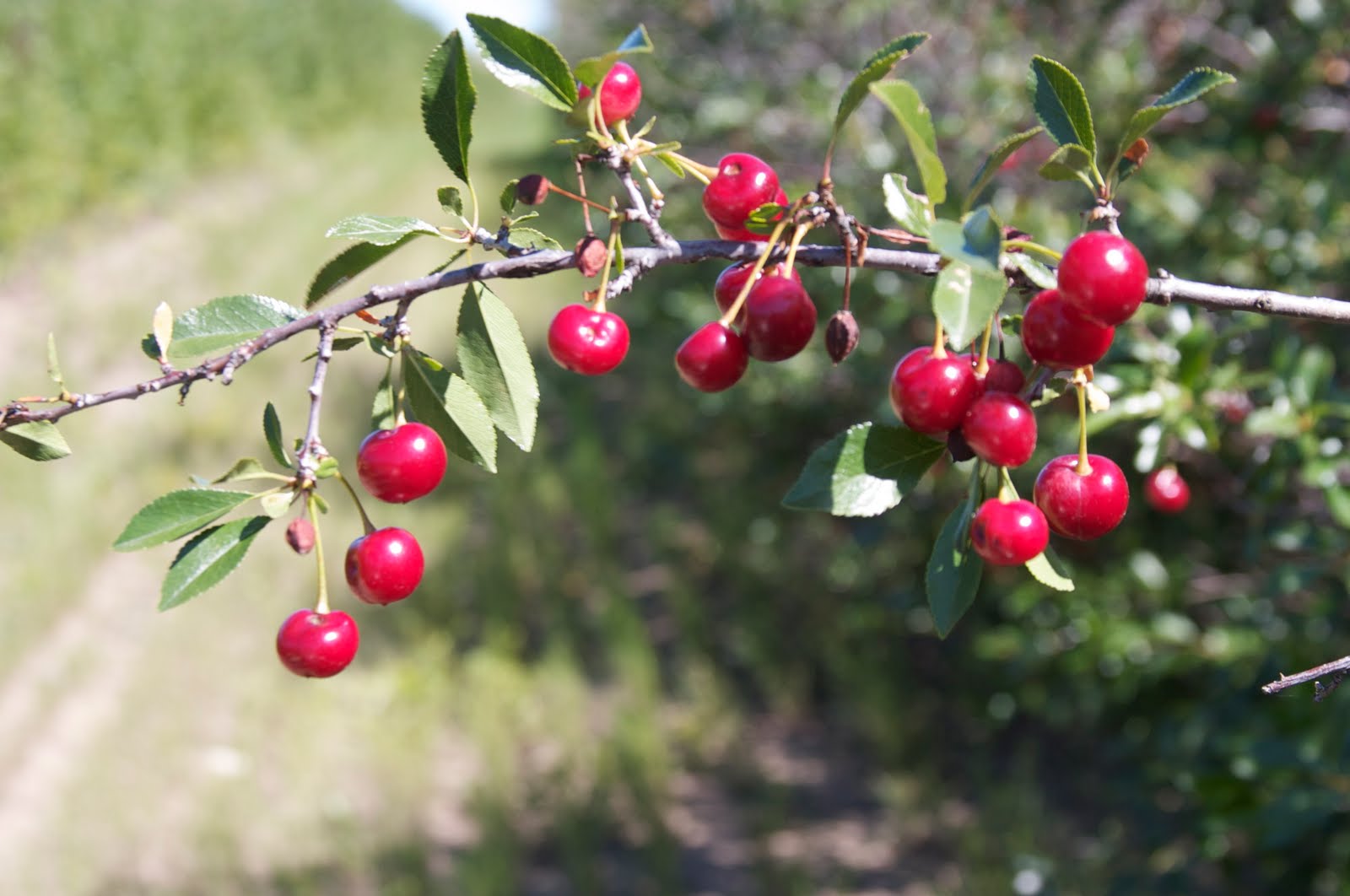
Duck Breast with Sour Cherry Sauce

Life in this small city is not dull!  I bought 10 fresh ducks from Webb Colony.  The Hutterites have the best chicken and the only place I have found so far for local duck.  But, since they only harvest a couple of times a year, I thought it best to stock up.

One duck was for a friend and I froze two to cook whole for myself.  I spent all evening cutting up the remaining seven ducks!  I was exhausted.  I froze all the duck breasts.  And I have the legs and thighs curing in the refrigerator for confit.

Then with all the little bits of meat here and there, I made ground duck.  I'll cook that later and will have a wonderful treat for you.  All the skin was cut into little pieces and I rendered the duck fat.  I have 2+ litres of wonderful white duck fat.  And also, don't forget about the cracklings.

I blogged all about cutting a duck and rendering fat and making confit.  Just click on my links and you will find my recipes.  Today is just a special dinner for me.  Duck Breast with Sour Cherry Sauce.

I picked the sour cherries at Treasure Valley farm.  They are so fast to pick and I was so excited.  But now that I am pitting all of them, it is more exhausting than exciting.  I made the first two pounds into a simple preserve adding 3/4 cup of sugar, 1/2 cup of red wine and a splash of balsamic vinegar.  I thought this would leave it simple enough to customize later.  I processed this in a water bath and will store away in my cold room for later.

For this recipe, I simply used the pan that I cooked the duck breast in.  I drained off most of the fat and only left a little on the bottom of the pan.  Then I  added some dried rosemary and the sour cherry sauce. 

I served this with some fiddleheads from the freezer and homemade pasta, also from the freezer.  Almost like fast food!

Duck Breast with Sour Cherry Sauce

1 duck breast
1/4 cup sour cherry preserve
1 sprig fresh thyme
1 shallot, finely chopped
1 clove garlic, minced
2 tablespoons of syrup from cherry preserve
1/4 cup fruity red wine


Preheat oven to 425F.

Score the skin of the duck breast at regular intervals in a crisscross pattern, cutting through the skin only and not into the meat.  Season each side of the breast with sea salt and coarsely ground black pepper.

Sear the duck breast, skin side down, in a very hot cast iron pan.  Turn the duck over so the skin is up and place the pan in the oven.  Cook until medium rare, about 10 minutes for medium sized breasts and 12 minutes for large.  When cooked, tent with tin foil and let rest for 10 minutes.

Meanwhile, saute the shallots and garlic in duck fat skimmed from the duck breast.  Add the wine and cherry syrup.  Add chopped thyme.  Add the cherry preserves.  Boil until sauce is reduced by about one third.  If desired, this sauce can be thickened with a teaspoon of cornstarch dissolved in 2 tablespoons of cold water.

To serve, slice the duck breast about 1/2 inch thick crosswise on a diagonal and spoon sauce over.

18.12.09

How to Use a Whole Duck when You are Cooking for One

I should be stating in most of my recipes that they can all be made when you cook for one.  I am only cooking for one throughout this entire blog, even though I state the amounts for more.  There is no reason you cannot eat well and have very nice food even if you live alone.

I enjoy duck and when I cannot find just the duck breast, whole duck is the only other option.

I found a whole, fresh duck at The Market in Maryville.  The whole duck was only $23.  This is when I start to ponder how to use the whole duck without just simply roasting it.

I decided to cut it apart and make a greater variety of dishes.  Below are the instructions on how to cut it apart.  I will be sharing some more of my recipes with duck over the next couple of days.

Now, how will I cook it?  This is my plan - one half breast with a wild rice salad, one half breast seared and served with dried fruit compote and spinach risotto, one leg braised and served with Morbier grits (or polenta if you are in another part of the world or garlic mashed potatoes), and the other leg and wings in confit.  All the skin and fat will be rendered down for use in making the confit and for other sauteing.  And last but not least, duck cracklings will be made after rendering the fat.  I can use it in a multitude of ways.  My best idea for using the cracklings is in an Iceberg Wedge Salad with Blue Cheese or to garnish any time you might have used bacon bits.

To break this down a little further, the confit can be kept refrigerated for a month.  The braised duck leg can be kept, cooked and refrigerated for 2 days.  You can keep raw duck refrigerated for about 2-3 days as well.  Add that up and you will have duck in 3 different recipes in about 8 days without eating leftovers.  Then the confit and the cracklings can be used up to a month.  The confit can be made into rillettes, a type of coarse pate for crackers.  Or add the confit to pasta, risotto or bake in arancini.  There are no end to ideas on how to use the confit.


These are a few pictures showing how to cut apart a duck.  First rinse and dry the duck.  Remove any giblets that may be in the cavity.

First, remove the wings.  You can find the joint easily by prying the wing back and snapping the joint.  Cut through and set the wings aside.  Remove the wing tips.

Next, remove the legs with thighs attached.  They will be attached to each other by the back.  Just cut through on either side of the back bone to separate the legs.  Duck legs are usually left attached to the thighs.  Trim excess fat and skin.

The breasts are usually deboned.  Run your fingers under the meat and next to the breast bone.  If necessary, use a sharp knife to help remove the meat from the bone.  Cut the breast down the middle to make two halves.  Trim excess fat and skin.

12.12.09

Spicy Chicken and Beef Satays


Tonight my house sit host comes to pack up the rest of her furniture.  I offered to cook for a little 'tea party' with a few of her friends.  This is the south but I just don't feel like making southern food.  I hope they will like my cooking!

I made beef and chicken satay grilled on hardwood charcoal this afternoon.  I will keep them in the refrigerator until we all get together after church tomorrow.  I bought Trader Joe's peanut sauce, but these satays are so flavourful that you don't even need the sauce!  I took a couple of 'authentic' recipes and just eliminated the hard to find ingredients.  It makes no difference to the enjoyment of these satays.

For a sweet, I am making date squares.  They don't make date squares down here.  Odd, I thought.  But when I went looking for dates I couldn't find the right ones.  I hope it tastes good with the light dates from California.  I am also serving some of my handmade chocolates from my class in Orlando.  And my Burnt Orange and Pecan Caramels.


Beef Satay

3 t whole coriander seeds

2 shallots, peeled and coarsely chopped
1 clove garlic, peeled and coarsely chopped

1 t ground turmeric
1 T fresh ginger,coarsely chopped
1 T brown sugar
1 T peanut oil
1/2 t salt


 Place the coriander seeds in a small food processor. Pulse until the coriander is well ground and dusty, about 2 minutes. (Don't remove the coriander from the food processor at this point — you're going to grind it again along with the other flavoring-paste ingredients.)
 

Add shallots, garlic, turmeric, ginger, brown sugar, oil, and salt to the food processor. Pulse until you have a smooth paste.  Add up to 2 tablespoons of water, 1 tablespoon at a time, periodically turning the processor off and, with a spoon, scraping the unground portions down toward the blade as you go, if necessary.  Transfer the blended marinade into a nonreactive bowl large enough to hold the beef.
 

Slice the beef into long, 1/4-inch-thick strips against (not with) the grain of the meat, as you would if carving a cooked piece of London broil. The pieces should be no wider than 1 inch.

Add the sliced beef to the bowl and combine it well with the marinade, making sure that every piece is coated. Allow the beef to marinate at room temperature for 1 to 2 hours.
 

Thread the beef strips onto the presoaked bamboo skewers, weaving the point of each skewer through the center of the beef every 1/4 inch to make sure it holds tight and remains secure while it cooks. Use 1 to 4 pieces of beef per skewer, depending on how long the pieces are, making sure that the beef extends from the tip to the middle of the skewer. Leave plenty of room so you can grab the skewer at the bottom — the meat should not extend from one end to the other.
 

To cook the beef on a grill, first prepare a medium-hot wood charcoal fire. When the fire is hot (this may take up to 20 minutes), place each skewer on the grill, making sure that the beef, not the skewer, is directly over the heat. Grill the beef until it is cooked through and has begun to pick up a few crispy brown-black spots, about 2 to 5 minutes (depending on how hot the fire is). Turn the skewers over carefully and continue grilling until the other side is browned, another 2 to 5 minutes. Do not overcook the meat — it will dry out if you do. Test a piece by touching it with your finger. The beef should be firm, not squishy. Another way to test it is by cutting into the thickest point: It should be very faintly pink, neither blood-red nor gray.
 

To broil the beef in the oven, preheat the broiler for at least 5 minutes and position the rack so that the satay skewers will be 3 inches from the heat source. Line a half-sheet pan with aluminum foil. Place each skewer on the pan, arranging them so that the meat is in the center of the pan and the skewers slightly hang over the outside, and slide the pan into the broiler. Broil until the meat begins to turn golden brown and develops a few char spots, about 5 to 6 minutes. Turn each piece over to brown the other side, an additional 5 to 6 minutes of broiling. Test a piece by touching it with your finger. The beef should be firm, not squishy. Another way to test it is by cutting into the thickest point: It should be very faintly pink, neither blood-red nor gray. If the surface doesn't char (your broiler or the distance from the flame may not allow it to), don't worry — as long as the meat is cooked through, the satay will taste wonderful. Do not overcook the meat; it will be unpleasantly dry.
 

Transfer to a serving dish and let the skewers rest for about 1 minute, until they are cool enough to handle. Serve immediately.


Chicken Satay
For 2 pounds of chicken breast 
1 stalks lemongrass
2 tablespoons coriander seeds
1 red chili
1 onions
thumb sized piece of fresh ginger
1/2 teaspoons salt
1/4 c brown sugar
1/2 cup water
1/4 cup vegetable oil
juice of 1 lime


Slice the chicken breast thinly in long narrow strips and set aside in the fridge while you prepare the marinade.
Slice the white part of the lemongrass finely and place in mortal and pestle or blender.  I bought the dried lemongrass in a jar and it worked just fine.  I used about 1 tablespoon.

Add coriander seeds, chopped chili, peeled and diced onion and ginger.  Pulse in a food processor until well combined and smooth.
Add salt, brown sugar, water, vegetable oil, and lime juice and mix well.
Add the marinade to the chicken pieces and stir until well coated.  Set aside for a few hours, or overnight.

To serve, thread one or two pieces of marinated chicken onto each skewer and barbecue or grill until golden brown on each side.